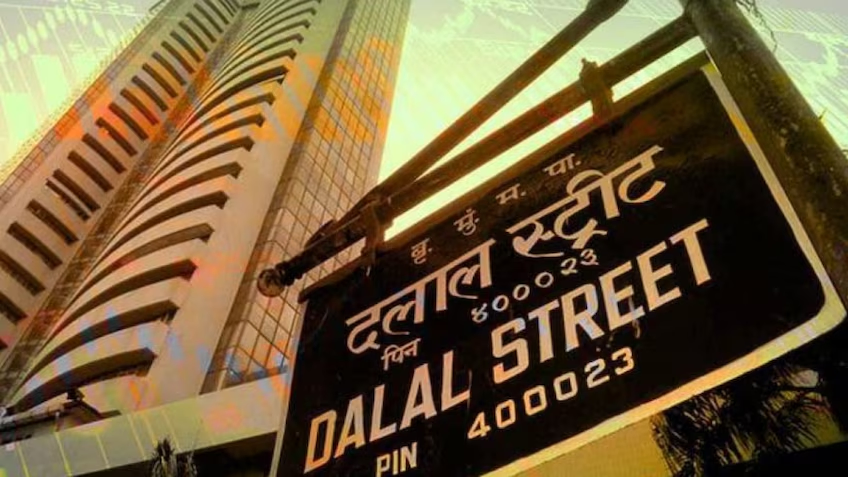
Indian equities ended lower on November 18 as investors took profits after a two-day rally and weakness in selected sectors pulled the market down from recent gains. The Sensex closed about 500 points lower, while the Nifty finished below 25,250. The broader Nifty Midcap index declined around 1.2 percent and the Smallcap index slipped about 0.35 percent. The pattern showed that selling was not confined to the largest companies, although the sharper fall in mid-sized shares suggested greater caution in parts of the market that had moved quickly during the preceding advance.
The decline came during a volatile global session shaped by questions around the artificial intelligence trade, oil prices and interest-rate expectations. Indian benchmarks had entered the day after two positive sessions, creating room for investors to lock in gains. More than 100 stocks still touched 52-week highs, including companies from media, aviation, banking, gas, metals and consumer businesses. That contrast is important: the headline indices fell, but strength remained visible in individual shares, pointing to selective rather than indiscriminate risk reduction.
Profit-taking returns after a short rally
Markets often become vulnerable after a quick rise because short-term traders and funds reassess whether prices have moved faster than earnings or economic expectations. A two-day rally does not by itself create an overheated market, but it can encourage investors to realise gains when global signals turn uncertain. The Sensex and Nifty decline reflects that process. Buyers did not disappear, yet they were less willing to support the previous pace of advance across the entire market.
Technical conditions also contributed to the caution. Elevated readings can indicate that prices have moved above recent averages, increasing the chance of temporary consolidation. That does not determine the next direction, but it affects how traders manage risk. When sectors begin to weaken at the same time, investors may reduce exposure until a clearer support level develops. The close below 25,250 therefore becomes a reference point for the next session rather than a complete verdict on the longer-term trend.
Broader market weakness sends a stronger signal
The 1.2 percent fall in the Midcap index was more pronounced than the 0.35 percent decline in Smallcaps. Mid-sized companies often attract investors seeking faster growth than established blue chips, but their valuations can also react more strongly when sentiment changes. A broader decline can tighten liquidity and make investors more selective about balance sheets, earnings visibility and debt. The day therefore rewarded company-specific conviction rather than simple exposure to the overall market.
At the same time, the list of shares reaching 52-week highs demonstrates that the market was not uniformly weak. PVR INOX, Sun TV Network, GAIL, Punjab National Bank, Bank of Maharashtra, MCX India and other companies reached fresh annual peaks. Their presence across several industries suggests that investors continued to respond to individual business conditions. A falling index can coexist with strong stock-level momentum when capital rotates between themes instead of leaving the market entirely.
Global technology and oil remain key external variables
International markets were focused on the strength and sustainability of artificial intelligence investment. Technology shares have been sensitive to earnings guidance, leadership uncertainty and the scale of spending on chips and data centres. Changes in global technology sentiment can influence Indian information-technology companies and foreign portfolio flows. Even when domestic fundamentals are unchanged, a decline in major overseas indices can encourage investors to reduce exposure in emerging markets until volatility settles.
Oil is another important variable for India because the country imports a large share of its energy needs. Crude prices fell during the session after US inventories rose more than expected, but conflict around the Strait of Hormuz limited the decline. Lower oil can support inflation and the external balance, while a renewed supply disruption could reverse that benefit quickly. Investors must therefore weigh favourable inventory data against geopolitical risk that remains capable of affecting currencies, transport costs and corporate margins.
What investors will watch after the decline
The next session will show whether the fall was a normal pause or the start of a deeper correction. Market breadth, foreign and domestic institutional flows, and the behaviour of financial and technology shares will be important. If the Nifty regains the 25,250 area with broader participation, confidence may recover. Continued weakness below that level could lead traders to test lower support zones and reduce leveraged positions.
For long-term investors, one session should not replace analysis of earnings, valuations and business quality. The simultaneous presence of a 500-point Sensex drop and more than 100 fresh annual highs is a reminder that index movement can hide very different company-level outcomes. The more useful question is not simply whether the market fell, but which sectors absorbed the selling and which continued attracting capital. That distinction will determine whether the pullback creates selective opportunities or signals a broader change in risk appetite.
PUBLISHED BY SUYASH PACHAURI, FOUNDER & OWNER, GLOBAL BOLLYWOOD | THE HOLLYWOOD SCOPE.