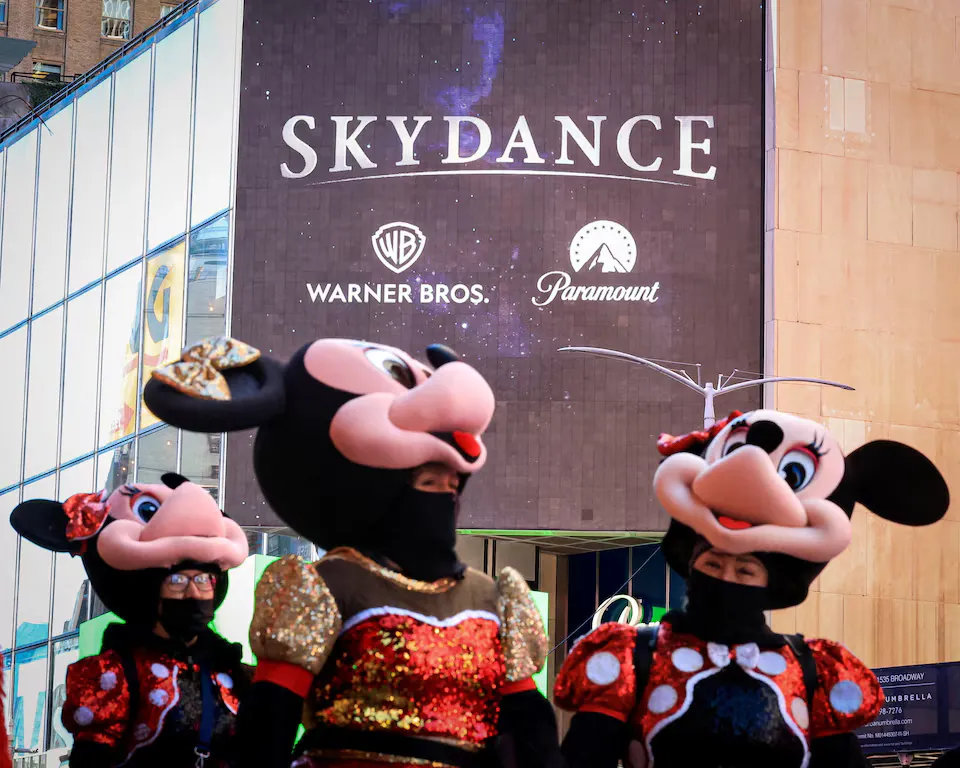
Skydance has completed its $110 billion takeover of Warner Bros. Discovery, creating one of the largest entertainment companies in the world. The new group combines Paramount and Warner film and television studios with HBO Max, Paramount+, CBS, CNN, DC Studios and an immense library of franchises. David Ellison will lead the company as chairman and chief executive, while former Mattel chief Ynon Kreiz takes a senior operating role. Shares have moved to the New York Stock Exchange under the ticker SKYD, marking the formal start of a difficult integration.
What the Skydance Paramount-Warner Merger Combines
The portfolio stretches across theatrical films, streaming, broadcast television, cable networks, news, games and publishing. It brings Mission: Impossible, Top Gun, Star Trek and Transformers into the same corporate structure as Harry Potter, DC, Game of Thrones, The Matrix and Looney Tunes. The scale gives Skydance enormous leverage in production, licensing and distribution. It also creates overlap in almost every part of the business, from marketing departments and studio operations to technology platforms and international sales.
The company plans to release at least 30 films a year, a commitment that could strengthen theaters if the slate remains diverse and well funded. Meeting that target will require disciplined scheduling so that projects do not compete with one another. Franchises provide reliable awareness, but the combined studio also needs original films and mid-budget work to develop future intellectual property. A huge catalog is an advantage only if management invests in creative development rather than treating recognizable brands as an endless extraction machine.
Streaming Leadership Faces a Complex Integration
HBO Max and Paramount+ enter the merger with different technology, pricing, programming and international strategies. Casey Bloys has received a multiyear agreement and an expanded role overseeing both services. The immediate question is whether Skydance maintains separate brands, creates bundles or eventually moves toward a single platform. Consolidation can reduce duplicated spending and lower customer-acquisition costs, but a rushed migration risks billing problems, lost viewing histories and subscriber cancellations.
The combined services have more than 200 million subscribers, giving the group meaningful scale against Netflix, YouTube and technology companies with deeper balance sheets. Size does not eliminate the need for profitable engagement. Management must decide how much content to keep exclusive, how aggressively to license shows elsewhere and how to balance advertising with subscription revenue. HBO's premium identity is especially valuable and could be damaged if it becomes indistinguishable from a broader mass-market catalog.
Debt and Cost Cuts Are the Largest Financial Risks
The transaction leaves the company carrying a heavy debt burden, with financing and inherited obligations creating intense pressure to generate cash. Management is targeting about $6 billion in cost savings. It says much of the reduction can come from non-labor areas, but overlapping operations make job losses likely. Cutting too deeply could weaken development, marketing and technical support just when the company needs a smooth transition. Credit ratings and borrowing costs will shape how much freedom executives have to invest in films and streaming.
News Independence Will Be Closely Watched
The new owner also controls CNN and CBS News, placing two influential news organizations inside a highly leveraged entertainment group. Settlements that cleared legal barriers included safeguards and oversight commitments related to editorial independence. The practical test will be whether journalists can make decisions without pressure from corporate strategy or political relationships. Strong governance matters because public trust can be damaged quickly, while reputational harm can spread to the wider company.
Employees and creative partners will judge the merger through everyday decisions about greenlights, contracts and staffing. Promises of efficiency sound different to teams worried about layoffs or canceled projects. Clear communication can reduce uncertainty, but only consistent investment will prove that management values the combined talent base. Guild relationships are another pressure point, especially as artificial intelligence, residuals and production levels remain sensitive issues across Hollywood.
A Defining Experiment for Hollywood Consolidation
The merger creates extraordinary reach but does not guarantee creative or financial success. Skydance must integrate systems, protect distinct brands, manage debt and reassure employees while continuing to deliver films and series audiences want. If it uses scale to support varied storytelling and better global distribution, the company could become a durable counterweight to technology-led platforms. If cost cutting overwhelms creative investment, the combination may simply concentrate risk. The next two years will show whether Hollywood consolidation can produce a stronger studio or only a larger balance sheet.
PUBLISHED
BY
SUYASH PACHAURI,
FOUNDER & OWNER,
GLOBAL BOLLYWOOD | THE HOLLYWOOD SCOPE