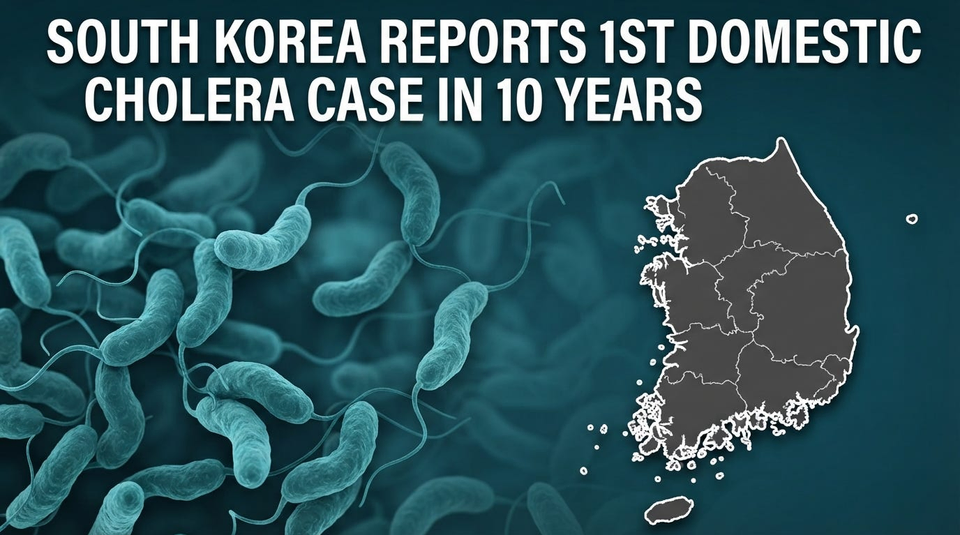
A rare domestic health alert returns after a decade
South Korea has confirmed its first cholera infection in ten years, prompting health officials to investigate how the patient contracted the waterborne disease. The affected person sought emergency care in the southeastern port city of Changwon after developing vomiting and diarrhoea. Laboratory testing identified cholera, and the patient later recovered and was discharged from hospital on Tuesday.
The case is notable because the patient had not travelled overseas during the previous two months. That detail makes the source investigation especially important. Officials are examining food, water and possible contact routes while tracing people who may have been exposed. No wider outbreak has been announced, and the available evidence concerns one confirmed patient rather than sustained community transmission.
Why cholera requires a rapid investigation
Cholera is caused by infection with toxigenic strains of the bacterium Vibrio cholerae. It spreads mainly when food or water is contaminated by material from an infected person. Many infections are mild, but severe cases can produce sudden watery diarrhoea, rapid fluid loss and dangerous dehydration. Without prompt replacement of fluids and electrolytes, a seriously ill patient can deteriorate within hours.
A single case can reveal a local contamination problem even when person-to-person spread remains limited. Investigators therefore need to understand what the patient ate, where drinking water came from and whether other people shared the same exposure. Testing potential contacts and environmental samples can help determine whether the infection was isolated or represents a risk that requires broader action.
South Korea's previous cholera history
The country last recorded cholera cases in 2016, when three infections were suspected to be linked to contaminated seafood. A much larger episode in 2001 sickened at least 162 people. Strong sanitation, safe municipal water and surveillance have made the disease uncommon in South Korea, but rarity does not eliminate the possibility of local exposure through seafood, untreated water or food-handling failures.
Changwon's position near the coast will make food histories and seafood distribution relevant lines of inquiry, although authorities have not publicly identified a cause. It would be premature to connect the case to any particular product or restaurant. The investigation must distinguish laboratory evidence from speculation so that businesses and communities are not blamed before an exposure route is established.
Public guidance focuses on water, food and hygiene
Health officials have advised people to drink safe water, eat thoroughly cooked food and wash or peel fruits and vegetables. Medical facilities have been asked to test and report suspected infections quickly. These measures are familiar, but they address the main transmission routes directly. Careful handwashing is particularly important after using the toilet and before preparing or serving food.
People with severe diarrhoea should seek medical care rather than trying to manage prolonged fluid loss alone. Oral rehydration solution can replace water and essential salts, while severe cases may require intravenous treatment and appropriate antibiotics. Fast care sharply reduces the risk of death. Public information should emphasise practical precautions without suggesting that ordinary social contact automatically carries the same risk as contaminated food or water.
What officials still need to establish
The most urgent questions concern the precise exposure window, the bacterial strain and whether genetically related organisms appear in food or environmental samples. Contact tracing can identify other people with symptoms, including mild cases that may not have reached a hospital. Authorities will also assess whether any shared supplier, water source or food venue connects the patient to additional potential exposures.
Transparent updates will be important if the investigation remains inconclusive. An unexplained case does not necessarily mean uncontrolled spread, but uncertainty can encourage rumours. Timely reporting of negative tests, the number of contacts monitored and any verified environmental finding would help the public understand whether the risk is expanding, contained or still under investigation.
What comes next
The patient's recovery is reassuring, yet the absence of recent foreign travel makes the epidemiological work significant. If investigators identify a contaminated source, targeted recalls or inspections may follow. If no source is found, enhanced surveillance can still determine whether the infection remains isolated and whether hospitals are detecting unusual diarrhoeal illness promptly.
For the public, the appropriate response is vigilance rather than alarm. Safe water, cooked food, clean produce and immediate care for severe symptoms remain effective protections. The larger lesson is that diseases made rare by sanitation can reappear, and the quality of surveillance determines whether one case stays isolated or becomes a broader health emergency.
PUBLISHED BY SUYASH PACHAURI, FOUNDER & OWNER, GLOBAL BOLLYWOOD | THE HOLLYWOOD SCOPE.