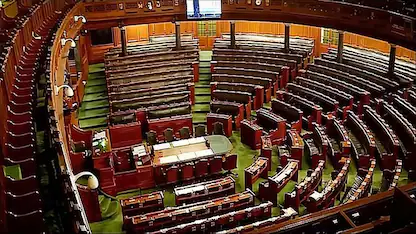
Both Houses asked to reconvene
The Union government has requested a special sitting of Parliament beginning November 30 to conduct what it described as essential government business. The Lok Sabha has been asked to reconvene on Monday, November 30, while the Rajya Sabha is expected to meet from Wednesday, December 2. Subject to the business placed before them, both Houses may conclude on December 3. The announcement creates a short and politically significant parliamentary window outside the ordinary calendar.
The official notice did not publish a complete legislative agenda. Political attention immediately focused on delimitation and implementation of the women's reservation law, but expectations should not be confused with confirmed business. Reports indicated that the Union Cabinet would consider a delimitation-linked women's quota proposal before the sitting. Until a bill and list of business are formally circulated, the scope and wording remain open.
Delimitation carries major federal consequences
Delimitation redraws constituency boundaries and can change the distribution of seats based on population and legal rules. Any proposal affecting representation is likely to generate intense debate between states that have followed different demographic paths. Southern states have repeatedly expressed concern that population-based changes could reduce their relative influence despite success in controlling population growth. Other regions argue that representation should reflect current population more closely.
These competing principles make process as important as outcome. Lawmakers will need access to the exact formula, census base, implementation schedule and safeguards for states. A compressed sitting may be sufficient to introduce a measure, but legislation with long-term constitutional consequences benefits from detailed debate and committee scrutiny. The government will face pressure to explain why a special session is necessary and how it will ensure meaningful participation.
Women's reservation depends on implementation details
The constitutional commitment to reserve one-third of seats for women in the Lok Sabha and state assemblies is linked to delimitation after a census. That connection means a technical exercise in boundary drawing can determine when a major political reform takes effect. Support for greater representation is broad, but parties may disagree over timing, rotation of reserved constituencies and the relationship with existing reservations for Scheduled Castes and Scheduled Tribes.
A clear proposal should identify the legal sequence from census data to delimitation and then to the first election using the new map. Voters and potential candidates need certainty well before nominations open. If the session addresses these questions, the debate will shape not only the size and boundaries of constituencies but also who can realistically contest them in the next electoral cycle.
Transparency will determine public confidence
Special sittings are constitutionally valid, yet limited advance information can fuel speculation. Publishing the agenda, draft texts and explanatory notes would allow parties and the public to examine the consequences instead of reacting to rumours. Parliamentary rules should provide enough time for amendments and recorded votes. If the business is urgent, the government should state the reason directly rather than rely on the broad phrase essential business.
The confirmed development is that the Houses have been asked to meet and that the window may run through December 3. Everything beyond that must be anchored to documents presented by the government. The coming days will show whether the session addresses delimitation, women's reservation or other matters. Whatever appears on the agenda, the legitimacy of the outcome will depend on open reasoning, adequate debate and respect for the federal balance embedded in India's parliamentary system.
Parties must prepare for substance, not speculation
Opposition parties will need to coordinate questions while preserving their different regional positions. Delimitation affects states unevenly, so a single slogan cannot replace examination of the formula. The government, meanwhile, should avoid introducing a complex measure at the last moment. Early circulation would permit legal experts, state governments and civil society to identify consequences that may not be obvious from the headline objective.
The presiding officers will also shape the session through scheduling and time allocation. Important legislation requires space for speeches, amendments and division votes. A record that shows competing arguments is valuable even when the government has the numbers to prevail. Parliament's role is not only to approve policy but to expose its reasoning to public scrutiny. That function becomes more important when the proposal may influence representation for decades. State legislatures and citizens will study that complete public record when carefully assessing the eventual constitutional and political settlement nationally.
PUBLISHED BY SUYASH PACHAURI, FOUNDER & OWNER, GLOBAL BOLLYWOOD | THE HOLLYWOOD SCOPE.