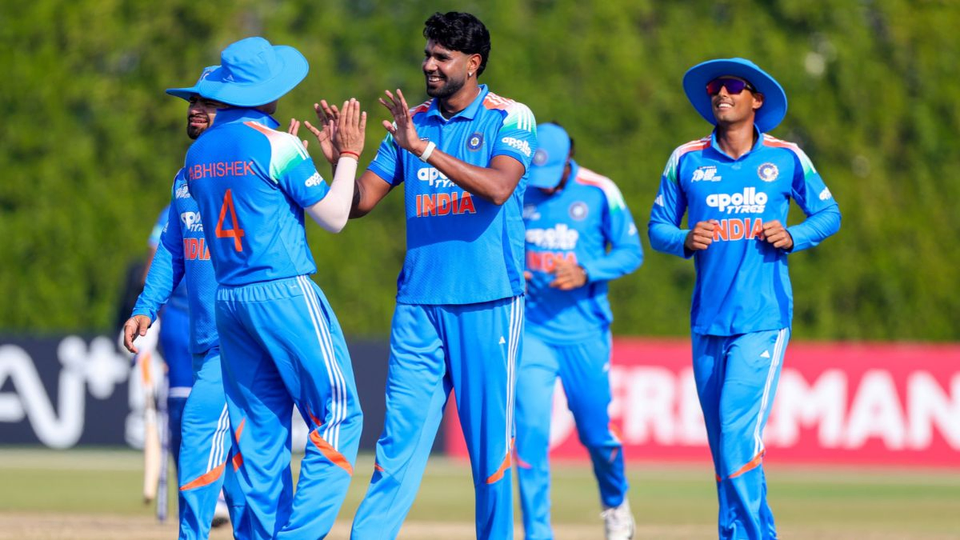
Sri Lanka A produced a commanding chase in Doha to defeat India A by eight wickets and advance to the Asia Cup Rising Stars final. Set 318 after India posted 317 for eight, Sri Lanka reached 318 for two in 41.3 overs, completing the chase with 51 balls remaining.
The result ended India A's campaign despite a total that would usually create substantial scoreboard pressure in a knockout match. Sri Lanka A beat India A by combining a rapid start with sustained control, refusing to let the required rate become a problem at any stage of the innings.
India A Build 317 After Winning the Toss
India chose to bat at the West End Park International Cricket Stadium and began aggressively. Vaibhav Sooryavanshi made 40 from 27 balls, hitting four fours and three sixes. His dismissal at 80 ended a forceful opening stand, but Abhishek Sharma continued the momentum.
Abhishek scored 78 from 63 deliveries with 11 fours and a six. Tilak Varma added another half-century as India moved beyond 200 with a platform for a demanding final total. The innings mixed early boundary hitting with a more measured middle phase, allowing the lower order to attack late.
Sri Lanka A Limit the Damage in the Final Overs
India still reached 317 for eight, but regular wickets prevented the innings from expanding toward a total closer to 350. Janith Liyanage finished with two wickets for 37 runs from five overs, an important return in a match where most bowlers faced sustained pressure.
The difference between 317 and a larger score became clearer during the chase. India had enough runs to demand discipline, but not enough to absorb missed chances and a dominant opening partnership without taking early wickets.
Lasith Croospulle Leads a Fearless Chase
Lasith Croospulle made 116 from 107 balls, anchoring the innings while maintaining the pace needed for a target above 300. His century ensured Sri Lanka did not have to choose between survival and scoring. Boundaries kept the required rate comfortable, while singles prevented India's bowlers from building pressure through dot-ball sequences.
Sineth Jayawardena attacked from the other end and was later named player of the match. The opening pair reached fifty rapidly and moved Sri Lanka past 90 inside 11 overs. Their partnership changed the emotional balance of the semi-final because India's total no longer looked intimidating.
India Miss an Early Opportunity
An early dropped chance allowed Jayawardena to continue, and Sri Lanka punished the error. In a chase of 318, a wicket in the opening over can force a new batter to absorb pressure. Instead, the openers controlled the field and forced India to make defensive changes sooner than planned.
India tried pace and spin, but neither method produced a sustained squeeze. Shahbaz Ahmed took one wicket but conceded 60 from his 10 overs. Harsh Dubey completed his full allocation without a breakthrough. By the time Sri Lanka lost their second wicket, the chase was already firmly under control.
Why India's 317 Was Not Enough
The surface rewarded positive batting, and Sri Lanka understood that hesitation would only allow the target to grow. Their run rate remained well ahead of the requirement, removing the need for reckless late hitting. India, in contrast, needed wickets rather than merely economical overs.
The match also showed the value of converting a fast start into a match-defining partnership. India's top order produced several strong contributions, but no batter played the long innings that Croospulle delivered. Sri Lanka paired that century with another major opening contribution and left the middle order with a straightforward finish.
Lessons for India A After the Semi-Final Exit
India's batting depth remains a positive. Sooryavanshi, Abhishek and Tilak demonstrated different scoring gears, and 317 in a semi-final is a competitive achievement. The review must focus on how the bowling group responds when conventional plans fail and how the fielding unit protects early opportunities.
A team defending a large total can become reactive if the opposition starts quickly. India needed a clearer method for breaking the opening stand, whether through a short spell of attacking fields, sharper pace changes or a different sequence of spinners. Without wickets, every defensive adjustment made Sri Lanka's chase easier.
Sri Lanka A deserved the final place because they treated 318 as a target to control rather than fear. Croospulle's century gave the pursuit structure, Jayawardena supplied momentum and the remaining batters finished without panic. India leave the tournament with several individual performances to build on, but the eight-wicket defeat is a reminder that a large total is only half of a knockout match.
PUBLISHED BY SUYASH PACHAURI, FOUNDER & OWNER, GLOBAL BOLLYWOOD | THE HOLLYWOOD SCOPE.