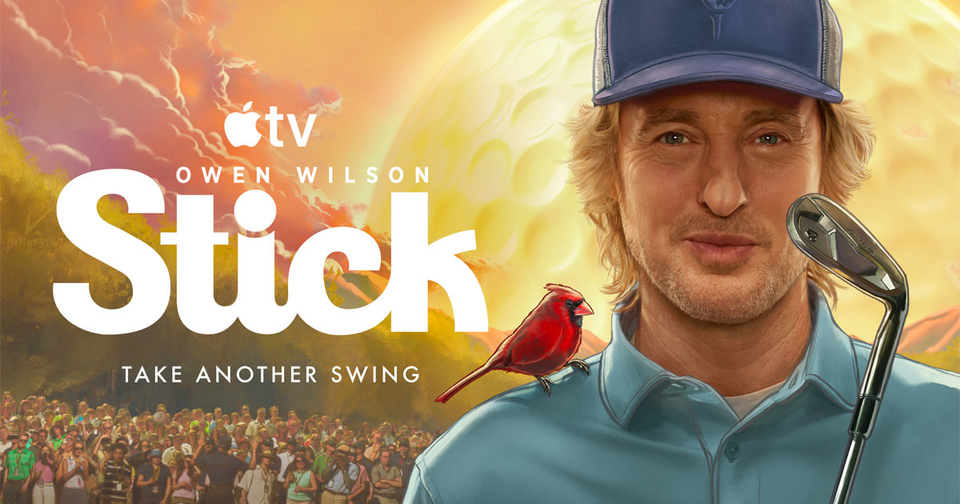
The second season of Stick is well into its weekly run, and the discussion around Owen Wilson's golf comedy now reaches beyond its November 4 debut. A November 10 cast gathering in New York brought several of the show's central performers together, reinforcing the idea that its stories about second chances can resonate beyond the golf course. The event is a completed promotional occasion rather than a new premiere. For viewers arriving later in November, the more practical question is how the characters have changed and when the remaining chapters will become available.
The ten-episode season began with two episodes on Wednesday, November 4, 2026. A third followed on November 11, and the fourth on November 18. The remaining episodes continue each Wednesday through December 30. That calendar matters because the series is using a gradual rollout rather than releasing every chapter at once. It gives viewers time to follow the relationships and the competing ambitions at its center without having to treat the promotional gathering as a current news event.
A New York Celebration With the Cast
The November 10 announcement documented an event at Chelsea Piers Golf Club, where the production's world of competition and camaraderie was reflected in a real driving-range setting. Owen Wilson, Peter Dager, Lilli Kay and Timothy Olyphant participated, along with executive producer Rodney Ferrell. The attendees took part in golf activities and a conversation about the new season. Those details make the gathering relevant as a glimpse of the ensemble's working relationship, although they do not amount to a fresh plot announcement or a second premiere.
There is a useful distinction between a photo-led publicity occasion and a story that will remain informative after the photographs have circulated. The names on the guest list provide context, but the lasting value lies in the second season's changing character dynamics, expanded supporting cast and forthcoming episode dates. A viewer guide can preserve those essentials without recycling a short-lived celebrity appearance into another headline that promises an entirely new development.
The Premise: Golf Is Only the Starting Point
Wilson plays Pryce Cahill, a former professional golfer whose career was cut short long before he was ready to abandon the sport. His personal life has suffered as well, leaving him searching for a meaningful direction. He becomes involved in the development of Santi, a gifted young player portrayed by Peter Dager. The central relationship begins with a familiar sports-drama arrangement: an older figure believes he can help someone else achieve the opportunities he lost. Yet the emotional question is what happens when helping becomes a way of avoiding unfinished business of one's own.
Season two changes that balance. Santi steps further toward professional competition, where raw ability alone is no guarantee of confidence or stability. Expectations are now attached to every swing, and the adults around him must learn when guidance is helpful and when it becomes pressure. Pryce, meanwhile, is invited to consider an improbable return to competitive golf. The narrative therefore involves two careers moving in opposite directions: one young talent entering a demanding world, and one veteran wondering whether that world will offer him another opportunity.
Owen Wilson's Pryce Faces a Different Challenge
The prospect of a comeback is not simply a way to extend a sports plot. Pryce has to confront the gulf between the player he remembers and the individual he is now. His old rival Clark Ross, played by Timothy Olyphant, encourages him to test himself again. The objective is ambitious: to attempt the kind of late-career achievement that would make Pryce an exceptional figure in professional golf. The announced premise does not guarantee that he succeeds. It creates a dramatic standard against which his judgment, preparation and resilience can be examined.
For Wilson, the role creates room for the relaxed comic timing for which he is known while asking him to play disappointment without turning every setback into a joke. A character who believes he has one last chance may be amusing one moment and painfully exposed the next. The tension is productive for a comedy-drama because a successful sporting outcome need not be the only definition of a satisfying ending. Pryce's ability to accept responsibility for his choices may be just as important as any tournament result.
Santi and the Weight of Expectation
Peter Dager's Santi is positioned at an equally important crossroads. The new season places him closer to the professional career that previously seemed like an aspiration. That change alters his relationships with mentors, peers and the people who have invested in his talent. Growth in a sports story can be deceptive: the better an athlete becomes, the harder it is to separate personal identity from results. Santi's arc gives the series an opportunity to explore the costs of recognition as well as the pleasures of progress.
The contrast between Santi and Pryce also prevents the narrative from becoming a single-character comeback story. A young competitor may need independence precisely when his mentor is most anxious about making himself useful. Pryce may need his own ambitions when Santi no longer depends on him in the same way. Their competing needs bring the idea of found family into focus. The most meaningful support sometimes involves stepping aside rather than remaining indispensable.
The Ensemble Around the Two Golfers
The returning ensemble includes Marc Maron, Mariana Treviño, Lilli Kay, Judy Greer and Timothy Olyphant alongside Wilson and Dager. Rhea Seehorn joins the second season as Amanda, a coach who becomes part of Pryce's comeback effort, while Maron's Mitts is a trusted caddie. New appearances also include John Higgins, Billy Zane, Rex Linn, Sasha Alexander and Missi Pyle. The breadth of the supporting cast signals an ensemble comedy where the lead characters' decisions are shaped by colleagues, friends and rivals rather than unfolding in isolation.
A coach, a caddie and an old rival
Amanda, Mitts and Clark occupy different functions in Pryce's prospective return. Coaching can supply technique and structure, a caddie brings practical companionship under competitive pressure, and a rival challenges the story someone tells about his own limitations. Their roles give the series several ways to test whether renewed ambition is a serious commitment or an emotional reaction to being left behind. The performances will ultimately determine how convincingly these competing influences work together.
The Confirmed Episode Calendar
Apple TV began the season with two installments on November 4 and scheduled one additional installment every Wednesday. The subsequent dates are November 11, November 18, November 25, December 2, December 9, December 16, December 23 and December 30, 2026. This makes December 30 the scheduled season finale. As of November 21, viewers who have followed the weekly rollout can already access the first four episodes, while six remain scheduled. Availability may follow the service's local release conventions, so viewers should consult their regional app for the exact clock time.
Why the weekly format helps this particular story
The week-by-week structure allows different characters to become subjects of discussion as Pryce and Santi make decisions whose consequences have not yet played out. A sports comedy often gains momentum through incremental improvements, mistakes and changing alliances. Releasing installments separately supports that rhythm, especially when the story alternates between an emerging young golfer and a veteran preparing to risk another disappointment. Nothing about the confirmed schedule, however, establishes particular match results or character outcomes for the unreleased episodes.
A Creative Team Built Around Character Comedy
Jason Keller created the series and serves as showrunner and executive producer. Wilson is also an executive producer. The wider executive-producing team includes Ben Silverman, Guymon Casady, Christopher Moynihan, Rodney Ferrell, Howard T. Owens, Drew Buckley, Lee Eisenberg and Bill Callahan. Their collective task is to keep the golf environment credible while ensuring that emotional conflict remains understandable for viewers who have never followed a tournament. Technical detail can enrich a story, but it becomes dramatically useful only when it changes a character's choices.
The series also includes appearances by golf broadcasters Jim Nantz and Trevor Immelman and by golf enthusiasts Matt Scharff and Dan Rapaport. Such participation can strengthen the recognizable texture of the sport without making the programme a documentary. The central premise remains fictional entertainment. Its sporting background is a framework for examining frustration, pride, friendship and the possibility that an apparent failure can lead to another kind of success.
What Remains Relevant After November 10
The cast event belongs to the historical record of the season's launch. Its relevance now is not that a photograph was taken or that the premiere is imminent, because the premiere has already happened. The enduring development is that Stick has returned with a clear ten-episode structure, new members of the ensemble and two intertwined ambitions that are still unfolding. Viewers considering the show can begin with its first four installments and follow the remaining Wednesday releases through the end of December.
The most interesting question is whether the series can make sporting success secondary to emotional maturity without losing the pleasures of competition. Pryce and Santi are pursuing different futures, but both must understand what they expect from one another. For that reason, the second season can be approached as a story about personal reinvention as much as a comedy about golf. Its upcoming chapters will determine how far that idea can be carried, and any assessment of the ending should await the actual finale.
PUBLISHED BY SUYASH PACHAURI, FOUNDER & OWNER, GLOBAL BOLLYWOOD | THE HOLLYWOOD SCOPE.