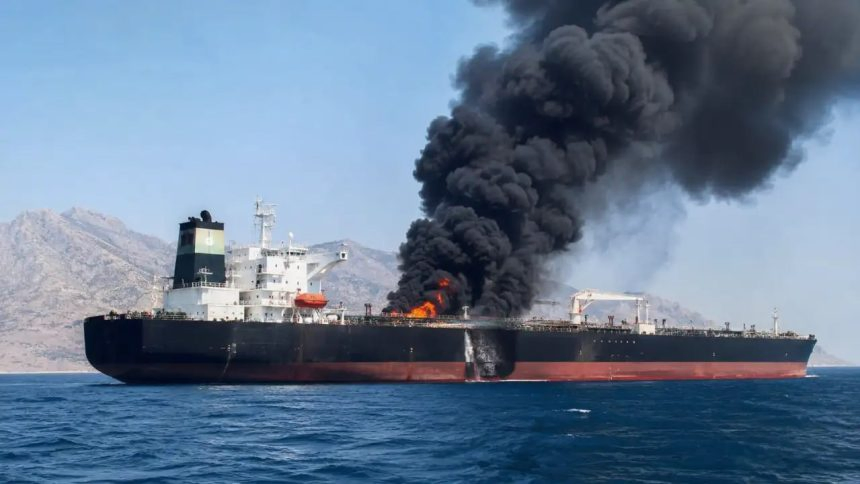
Multiple Incidents at a Critical Maritime Chokepoint
A new series of tanker attacks near the Strait of Hormuz has intensified concern for commercial shipping moving through one of the world's most important energy corridors. Maritime authorities reported that one vessel sailing outbound was struck on its stern by an unidentified projectile north of Khasab, Oman. A separate report described a tanker hit in its engine room east of the same area. A later account said at least three oil tankers had been attacked in or near the strait during the day.
No casualties were reported in the two incidents initially documented by the maritime security centre, and the environmental impact remained unclear. The attacks followed another strike near Khasab a day earlier that caused a fire aboard a tanker. The repeated incidents indicate that the danger is not confined to one vessel or one isolated navigation error. Shipowners and crews are facing an active threat while trying to leave the Gulf through a narrow, heavily trafficked passage.
Why Khasab and the Strait Matter
Khasab sits on Oman's Musandam Peninsula at the entrance to the Strait of Hormuz. The channel connects the Persian Gulf with the Gulf of Oman and the Arabian Sea. Before the current conflict disrupted traffic, close to one-fifth of globally traded crude oil moved through this route, along with significant volumes of liquefied natural gas and refined fuel.
The geography gives shipping limited room to avoid a threat. Tankers must follow navigable routes through waters bordered by Iran and Oman, while naval forces, patrol aircraft and commercial vessels operate in close proximity. A projectile strike, mine or misidentified target can quickly become a rescue emergency, pollution event and geopolitical crisis. Even vessels that are not directly damaged may face delays, higher insurance costs or orders to wait for naval escorts.
Conflicting Claims Complicate the Security Picture
The exact cause and responsibility for every incident were not immediately established. Maritime reports described unidentified projectiles, while Iranian military statements about another vessel referred to a naval mine. State media also described intensified operations aimed at stopping ships in the strait. Those claims require careful verification because the circumstances of attacks can become part of a wider information campaign.
For shipping companies, uncertainty is itself a risk. Operators must decide whether to continue a voyage without a complete understanding of the weapon, attacker or intended target. Crews may have only minutes to respond to a fire, flooding or loss of propulsion. Authorities also need accurate locations and damage reports to keep other vessels away from hazards without blocking the route entirely.
The Immediate Economic Consequences
Energy markets react to Hormuz incidents because disruption can affect supply expectations even when oil continues to flow. A sustained reduction in traffic would force exporters and buyers to rely on limited pipeline alternatives, longer routes or stored inventories. Freight rates and war-risk premiums can rise before any physical shortage appears, adding costs that eventually reach refiners, airlines, manufacturers and consumers.
The effect is not determined by a single day's price movement. Traders will watch whether attacks continue, whether damaged tankers block lanes, and whether producers change loading schedules. Insurers may impose new conditions on voyages, while crews can demand higher compensation or refuse assignments. Environmental damage could create additional restrictions if oil threatens coastlines, fisheries or desalination facilities that supply drinking water to Gulf communities.
What Would Signal Escalation or Stabilisation
The next signals will come from verified incident investigations, the condition of affected vessels and the posture of regional naval forces. More coordinated escorts, exclusion zones or retaliatory strikes would suggest that governments expect the threat to persist. A decline in traffic, cancellation of bookings or a sharp rise in insurance premiums would show that commercial operators are losing confidence in the route.
Stabilisation would require more than a brief pause. Shipping companies need predictable passage, credible communication among militaries and evidence that vessels will not be attacked for following disputed routes. Diplomacy over the wider conflict remains connected to maritime security because pressure on shipping has been used to influence sanctions, blockades and negotiations. Until those incentives change, every transit carries strategic weight. The latest tanker strikes have turned that danger from a background concern into an immediate operational test for the energy system.
Crew welfare also deserves a central place in the response. Seafarers bear the direct risk of decisions made by governments, military commands and commercial operators far from the bridge of a tanker. Companies should provide updated threat briefings, emergency training, reliable communication and the right to report unsafe conditions. A cargo can be replaced and a route can be adjusted. A crew trapped by fire, damaged machinery or contaminated water cannot be treated as another line in a freight calculation. The same duty extends to rescue teams sent toward an active threat zone. Human safety must remain the first priority.
PUBLISHED BY SUYASH PACHAURI, FOUNDER & OWNER, GLOBAL BOLLYWOOD | THE HOLLYWOOD SCOPE.