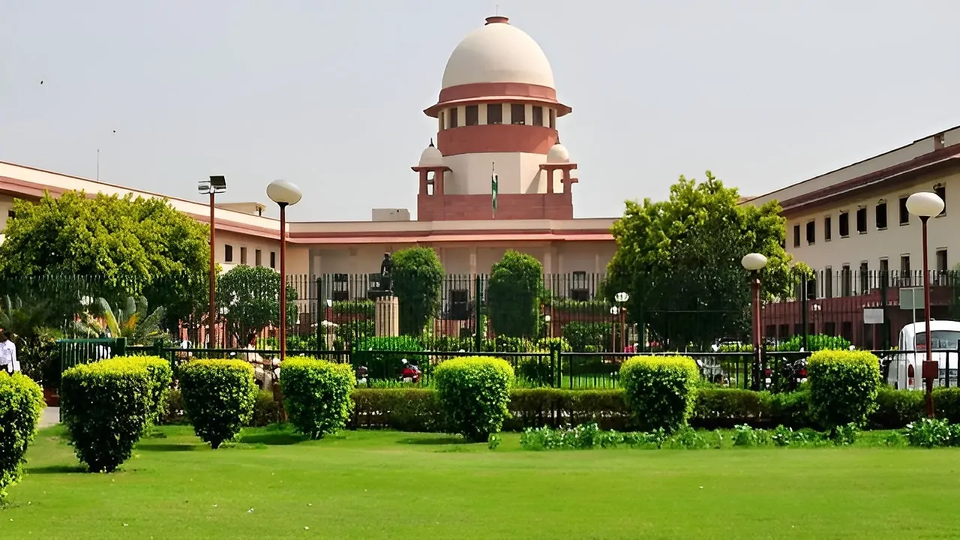
Premature release set aside
The Supreme Court has cancelled the remission that enabled former parliamentarian Anand Mohan to leave prison while serving a life sentence for the 1994 killing of Gopalganj district magistrate G Krishnaiah. A bench of Justices Dipankar Datta and Sheel Nagu directed him to surrender within one month. If he does not do so, authorities may take steps to return him to custody according to law.
The judgment set aside the Bihar government's April 24, 2023 remission notification and the amendment to the Bihar Prison Manual that removed a restriction on early release for people convicted of killing a public servant on duty. The court described the remission as legally unsustainable. It did not permanently bar the state from considering any future application, but required that any process begin only after surrender and comply with the proper legal framework.
Why the prison rule mattered
Before the amendment, the prison manual treated the murder of a public servant on duty as a category that prevented premature release. Removing that category changed the eligibility position of prisoners including Mohan. The legal challenge argued that a rule of general application had been altered in a way that produced a direct benefit in a politically sensitive case. The court examined both the validity of the amendment and the decision taken under it.
Remission does not erase a conviction. It shortens the period a person must remain imprisoned after the executive considers conduct, sentence policy and other statutory factors. Because it involves state discretion over a punishment imposed by a court, the decision must follow transparent criteria and relevant advice. Selective or retrospective changes can create an appearance that political influence, rather than consistent policy, determines who receives release.
The case carries an institutional message
G Krishnaiah was killed while serving as a district magistrate, making the case a symbol of the risks faced by public officials performing official duties. Rules that give additional weight to such crimes are intended to protect the functioning of government, not to value one life above another. Changing those rules requires a defensible public-policy basis and equal treatment for similarly placed prisoners.
The judgment reinforces that executive remission is open to judicial review when the process is arbitrary, based on irrelevant material or inconsistent with governing law. Courts do not ordinarily replace the executive's assessment with their own, but they can require the decision-maker to use lawful criteria. That distinction protects both separation of powers and the rule that discretion cannot become an unrestricted favour.
Surrender comes before any fresh consideration
The one-month period gives Mohan a defined opportunity to comply voluntarily. Once he is back in custody, the state may examine any legally available request under valid rules, subject to the judgment's reasoning. A new decision would need to consider the correct authorities, the nature of the offence and any mandatory opinions. It could also face further review if the process repeats the defects identified by the court.
The ruling does not reopen the underlying trial or change the conviction. Its focus is the legality of release from a life sentence. For the victim's family, the order restores the sentence's practical effect after more than three years of controversy. For governments across India, it is a warning that prison policies cannot be altered and applied without a coherent legal justification. Remission remains a constitutional and statutory power, but its exercise must withstand public-law scrutiny.
Prison policy must apply consistently
States periodically revise remission rules to address overcrowding, rehabilitation and humanitarian circumstances. Those goals are legitimate, but categories and exclusions should be developed through evidence and applied to every eligible prisoner. A policy written around one prominent case damages confidence even if its language appears general. Publishing reasons and review criteria can help families of victims and prisoners understand how decisions are made.
The judgment may prompt other states to examine whether their rules give sufficient weight to offences against public servants and whether decision files record mandatory opinions. It should not be read as a rejection of rehabilitation. Instead, it insists that compassion and reintegration operate through law. A fair system can recognise good conduct while respecting the gravity of the original offence, the rights of victims and the institutional purpose of a sentence imposed by a court. Consistent written reasons also make later judicial review more focused, transparent and fair.
PUBLISHED BY SUYASH PACHAURI, FOUNDER & OWNER, GLOBAL BOLLYWOOD | THE HOLLYWOOD SCOPE.