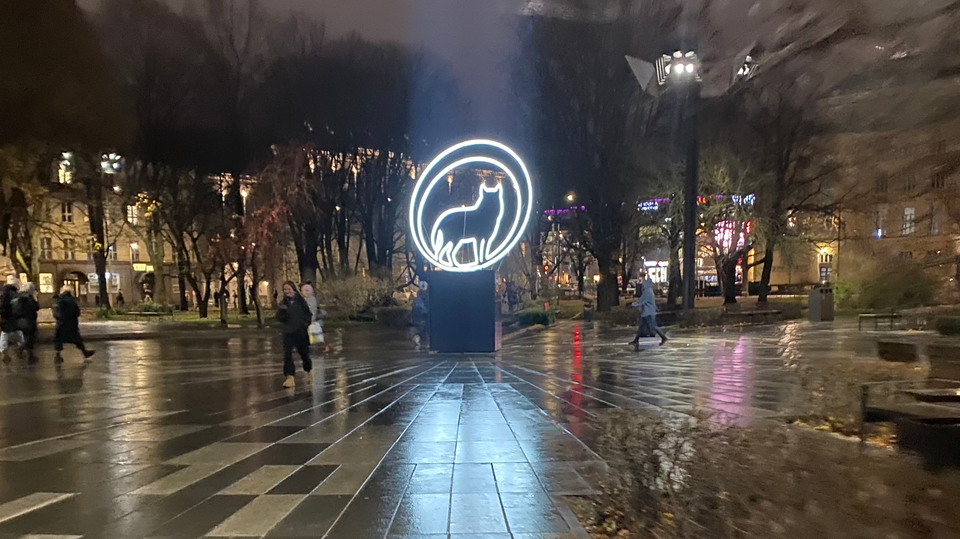
A Festival Where Baltic Cinema Commands the Centre
The 30th Tallinn Black Nights Film Festival closed after presenting more than 200 films across official competition, first features, Baltic cinema, documentary, critics' selections and boundary-pushing sidebars. Held in Estonia from November 6 to 22, the festival offered a broad global programme while giving unusual visibility to filmmakers from Lithuania, Latvia and Estonia.
That regional emphasis distinguishes Tallinn from festivals where Baltic work can be scattered across larger international lineups. Here, audiences can see patterns across neighbouring film cultures: intimate dramas shaped by political pressure, documentary traditions attentive to memory, and emerging filmmakers willing to mix realism with surreal or experimental form.
Lithuanian Filmmaking Made a Strong Impression
How to Divorce During the War won the Baltic Film competition. Directed by Andrius Blaževičius, the drama follows a married couple in Vilnius whose separation intersects with the continuing Russian invasion of Ukraine and the resulting refugee crisis. The film uses a private fracture to examine a public emergency, refusing the idea that ordinary emotional life pauses during history.
Its success also drew attention to producer Marija Razgutė, whose body of work has helped define a visible wave of intimate Lithuanian cinema. These films often combine warm, tactile images with social concerns that become sharper because they are experienced through relationships rather than speeches.
Latvia and Georgia Added Distinctive Character Studies
Linda Olte received recognition for directing The Child, a relationship drama about a couple confronting different desires around parenthood. The film reportedly gives particular force to its central performance, using physical behaviour and silence to express pressure that dialogue cannot resolve.
Supporting Role, from Georgian filmmaker Ana Urushadze, follows an ageing actor through Tbilisi after a young director asks him to play an unsympathetic minor part. Its journey becomes a critique of male artistic ego and the fantasies filmmakers build around themselves.
Official Competition Winners Connected History to Intimate Lives
On Top of the Cliff received the festival's Grand Prix, with Bianca Bucelli also recognised for her performance. The period drama is set in an isolated Catholic boarding school where faith, authority and repression are challenged by the arrival of a new student.
Other recognised films addressed postwar grief, migration, human trafficking and social work. Their subjects sound heavy, but the strongest festival cinema avoids reducing people to issues. It gives political conditions a human scale, allowing contradiction and uncertainty to remain visible.
First Features Revealed New Performers and Directors
In Starland gave Sing Sing breakout Clarence Maclin a rare leading role. He plays Ernie, a quiet man whose small-town life is disrupted by a group of attention-seeking influencers. The casting moves Maclin away from the autobiographical associations of his earlier success and asks him to carry a fictional character built around withheld pain.
Status: Rejected, led by Ruby Ruiz, uses comedy to examine loneliness and the false promise of the American dream. Its story of a grandmother entangled with an online scammer turns a contemporary danger into a character study rather than a simple warning.
The Festival's Sidebars Rewarded Formal Risk
The Rebels With A Cause section again provided a home for work that resists easy genre labels. Sounds of the Desert blended music, memory and Afrofuturist imagination through figures connected to Sun Ra's Arkestra. Aroma used a woman's selective sense of smell to enter another person's memories and desires, while Arrow for a Stone Heart combined documentary and fable.
Such films matter because festivals should do more than predict awards campaigns. They create a temporary space where unusual forms can find their first committed audiences. A work that seems difficult in a commercial schedule can become one of the most discussed experiences of a festival week.
Why Tallinn Matters Beyond the Awards
Awards provide useful visibility, but the lasting value of Tallinn Black Nights lies in discovery. Filmmakers from smaller markets can meet programmers, distributors and critics who might carry their work into other territories. Audiences can encounter national cinemas without the filter of a single breakout title.
The 2026 edition also demonstrated that regional focus and international range are not competing goals. The more clearly a festival understands its own location, the better it can connect local and global concerns.
A Baltic Platform With Expanding Influence
Tallinn's scale now places it among the significant late-year festival stops, yet its identity remains tied to cold streets, packed multiplex screenings and an audience willing to spend weeks moving between unfamiliar films. That combination of institutional reach and regional character is difficult to manufacture.
The strongest lesson from the 30th edition is that Baltic cinema should not be treated as a peripheral category. Its filmmakers are engaging with war, migration, family, ageing and artistic identity through forms that deserve wider circulation. Tallinn Black Nights gives those voices a centre of gravity, and the discoveries made there can continue travelling long after the festival lights have gone down.
PUBLISHED BY SUYASH PACHAURI, FOUNDER & OWNER, GLOBAL BOLLYWOOD | THE HOLLYWOOD SCOPE.