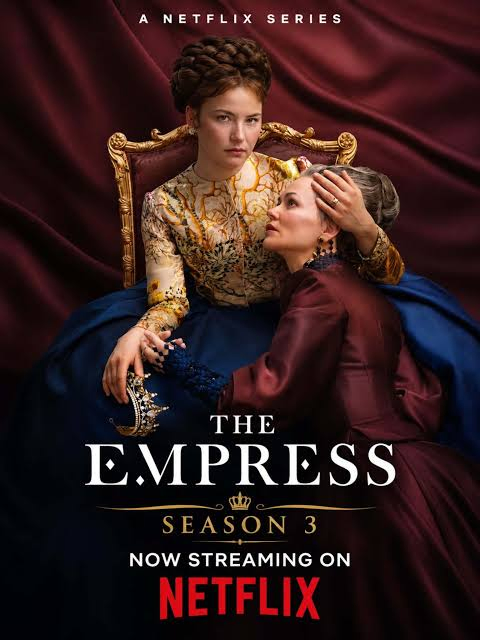
The final chapter arrived on November 12
The Empress returned to Netflix on November 12, 2026 for its third and final season. The six-episode conclusion completes a historical drama about Elisabeth of Austria and Emperor Franz Joseph, whose marriage and political obligations are repeatedly tested by the conventions of imperial court life. That November launch is already in the past. The continuing editorial value lies in explaining the established cast, the announced creative team, the historical setting and how the ending fits the previous installments, rather than presenting a past release as an urgent new announcement.
For international viewers, this is a defined three-season series rather than an open-ended renewal story. Its earlier chapters introduced Elisabeth as an independent-minded young woman finding her place in a rigid political and social order. The final season develops the consequences of the relationships and rivalries formed along the way. Readers who have not started the show can approach it as a complete period narrative, although important character developments will make more sense when watched in sequence.
A marriage under extraordinary pressure
The season's official premise begins after the Sardinian War. Franz returns from conflict troubled by the human cost of his military decisions, while Elisabeth tries to support him and advocate for what she believes is right for the empire. Their relationship becomes increasingly unstable. The ruler's experience of war and the wider political consequences are intertwined, offering a dramatically useful conflict between responsibilities at home and decisions made for an entire nation. This is the narrative setup, not a critical judgment about the finished episodes.
Franz's infidelity, resistance at court and Elisabeth's health problems force her to confront difficult choices. She travels away from Vienna and encounters Count Andrássy, a figure tied to Hungary's political future. Their connection introduces competing questions about personal attraction, national loyalty and the limits of a royal role. These developments were disclosed in advance as part of the season synopsis. This guide avoids revealing how they ultimately resolve, so readers can understand the central stakes without encountering a detailed account of the ending.
Why Hungary and Mexico matter
The story expands beyond the Viennese palace. Alongside the developments involving Hungary, Franz's brother Maximilian and his wife Marie travel toward an imperial role in Mexico. These parallel journeys underline how a dynasty can govern across distance while remaining vulnerable to competing ambitions and political tensions. Different branches of the family face distinct choices, but their experiences raise shared questions about authority, belonging and responsibility. The geographical scale also allows the production to frame court politics as something with consequences outside ceremonial rooms.
Viewers should keep historical dramatization separate from established historical fact. Elisabeth, Franz and Maximilian belong to real nineteenth-century history, but the series builds imagined dialogue, relationships and compressed dramatic situations around its central figures. The existence of historical people does not mean every private conversation happened as represented on screen. A compelling period drama can be a starting point for curiosity, but it is not a replacement for independent historical reading about the Habsburg world or the era's political conflicts.
The returning actors and their roles
Devrim Lingnau Islamoğlu portrays Elisabeth, with Philip Froissant returning as Franz. The announced ensemble also includes Melika Foroutan, Johannes Nussbaum, Josephine Thiesen, Runa Greiner, Dejan Bućin, Marlene Burow, Christophe Favre and Merlin Sandmeyer. Their characters bring different loyalties, family expectations and ambitions into a narrative centered on imperial power. The continuation of the main ensemble matters because the final season depends on tensions established over two earlier installments rather than beginning a completely new collection of unrelated conflicts.
The relationship between Elisabeth and Franz remains the emotional anchor, while figures surrounding them can illuminate conflicting expectations of monarchy and family. An ensemble period drama depends on portraying authority not only through declarations but also through gestures, etiquette and the consequences of personal decisions. Naming the cast is a verified production fact; however, a performance ranking would require a separate critical review of the completed series. This feature does not claim firsthand assessment of every acting choice or scene.
Elisabeth's evolving idea of independence
From the beginning, Elisabeth's challenge has involved more than adapting to fashionable gowns and formal ceremonies. The court's restrictions determine whom she can trust, what she may say and how her personal conduct reflects on the monarchy. By the final installment, her desire for an independent voice is complicated by concern for the people affected by imperial policy. The premise makes duty and self-determination competing obligations rather than presenting either as an easy solution.
That emphasis offers a point of entry for viewers unfamiliar with the specific politics of nineteenth-century Europe. Questions about protecting a relationship, exercising influence and challenging inherited institutions can resonate across cultures. Yet the production remains a work of historical fiction shaped by contemporary storytelling. The appropriate way to discuss its relevance is to identify the themes in the declared premise, not claim that a dramatized episode supplies definitive historical evidence about a real individual.
The creators and the production behind the finale
Katharina Eyssen returns as showrunner and shares creative responsibility with executive producer Robert Eyssen. The production is made by Sommerhaus Serien GmbH, with Jochen Laube and Fabian Maubach among the executive producers. Scarlett Lacey returns in an executive producing role, while Lars Gmehling is co-executive producer. Florian Cossen and Julia Langhof directed the third season. This continuation of key personnel is important for a final chapter expected to maintain an established storytelling voice and visual identity.
Filming took place in Bavaria, the Czech Republic and Spain. Constructing a convincing imperial landscape across several modern countries requires coordination between production design, locations, wardrobe, hair and makeup, photography and performance. The named department leaders include costume designer Gabriela Reumer, cinematographers Katharina Bühler and Rik Zang and production designer Theresia Anna Ficus. Their disciplines are central to any ambitious historical production, especially one expected to connect intimate family scenes with events taking place across multiple territories.
Costumes, locations and the language of power
A period costume can communicate rank, obligation and personal identity without a line of explanatory dialogue. Court interiors can convey limitations, while a move beyond those rooms may suggest the possibility of greater independence. This is a useful lens for thinking about the craft of historical drama, not an unsupported claim about particular shots in the final season. A sustained production must maintain design consistency as characters move through political and emotional changes over many episodes.
The international scope also demonstrates why long-form historical television depends on careful collaboration. Exterior locations, studio interiors, language coaching, lighting, props and hundreds of decisions about practical continuity all support the audience's confidence in the fictional world. For filmmakers, the production offers a clear example of how specialized departments contribute to a coherent setting. Those behind-the-scenes considerations are relevant beyond the release week, even after promotional interviews and premiere notices have disappeared from immediate attention.
How Season 3 completes the earlier storyline
The first season followed Elisabeth's entrance into court life after marrying Franz and her difficult relationship with dynastic expectations. The second raised the pressure of succession, personal loss and political instability. The final six episodes take those tensions into a new stage shaped by military defeat, marital conflict and journeys beyond Vienna. Watching the earlier chapters helps clarify why the latest developments matter to characters who have been changed by their previous experiences.
Although the story centers on a ruling family, it also raises questions about individuals who do not possess equal freedom to shape their future. Court members, relatives and political allies may be differently constrained by their positions. The final season's synopsis places Elisabeth at a crossroads between personal desires and public service. Whether each storyline achieves a satisfying conclusion is a matter for criticism after viewing. The factual point is that the third installment was expressly designated the concluding season.
An international audience for a German-language drama
The first season won the International Emmy Award for Best Drama Series in 2023, helping establish the series beyond its original market. Earlier seasons also appeared in viewing rankings in numerous countries. Those are historical achievements and should not be confused with a verified weekly performance claim for November 2026. A careful account of a series' reach separates enduring awards and earlier milestones from figures that change as new episodes become available and viewing trends evolve.
The global appeal of a locally rooted royal drama illustrates how particular settings can still communicate universal emotional tensions. Family conflict, trust, public duty and an individual's determination to be heard are not limited to one country or period. At the same time, viewers benefit from considering the historical background separately, particularly when fiction compresses complex political events into a character-centered arc. Entertainment value and historical literacy can coexist without treating a scripted series as a documentary.
The practical viewing guide
The Empress Season 3 became available worldwide on Netflix on November 12, 2026. It consists of six episodes and completes the three-season story. The leading performers Devrim Lingnau Islamoğlu and Philip Froissant return, alongside the announced ensemble and established production team. The release date was originally announced on September 23, and a final-season trailer and artwork followed on October 7. Neither older announcement constitutes a new development on November 21.
For readers deciding what to watch, the most useful information now is that the full concluding chapter is available, the story follows directly from previous seasons and the central conflict involves the difficult intersection of marriage, health, political duty and personal independence. A future review may examine pacing, performances and historical liberties in detail. Until then, this factual feature provides a spoiler-conscious introduction to the final season and the creative people who brought it to the screen.
PUBLISHED BY SUYASH PACHAURI, FOUNDER & OWNER, GLOBAL BOLLYWOOD | THE HOLLYWOOD SCOPE.