A literary thriller arrives in six parts
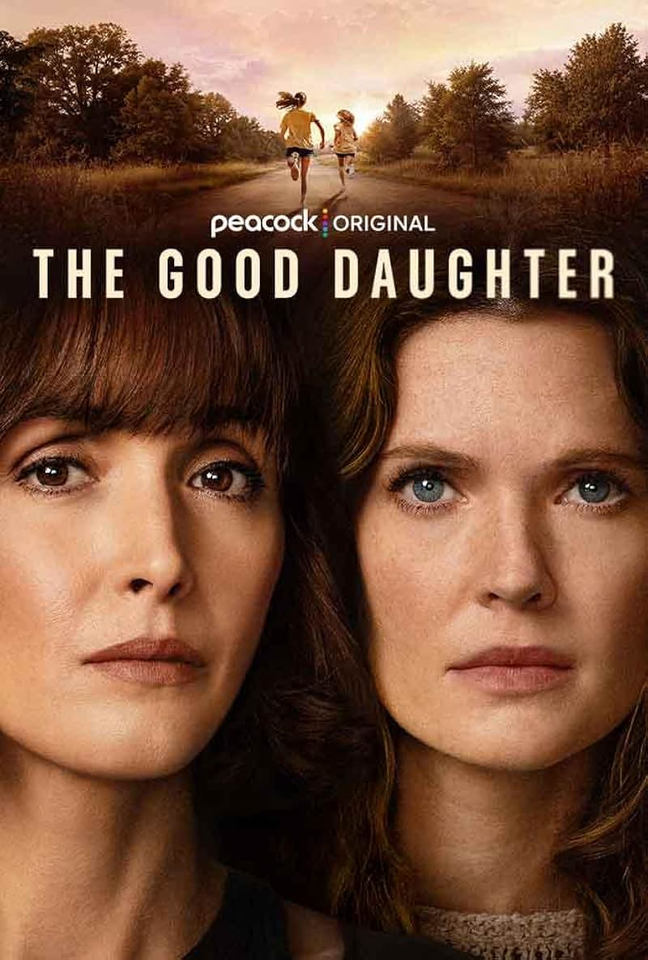
The Good Daughter reached Peacock in the United States on November 12, 2026. The television adaptation brings Karin Slaughter's novel into a self-contained season with Rose Byrne and Meghann Fahy at its centre. All six installments became available together rather than being distributed over a weekly calendar. A later addition to a third-party streaming schedule should not be mistaken for the original premiere.
The title raises a question that is more personal than the mechanics of a detective story. What happens when a family's expectations of loyalty become inseparable from memories of a traumatic experience? The two Quinn sisters have grown into adults with legal careers, yet their professional ability to examine evidence cannot automatically resolve their own history. A fresh case in their Georgia hometown draws them back toward the events that shaped their relationship.
A cast built around the Quinn family
Rose Byrne plays Samantha Quinn, while Meghann Fahy portrays Charlotte, also known as Charlie. Brendan Gleeson appears as Rusty, their father. Olivia Williams, Harper Steele, Michael Dorman, Audrey Grace Marshall, Jake McDorman and Paula Malcomson are among the ensemble. Instead of a lone investigator moving through an unfamiliar community, the premise places the central characters inside a social world where existing relationships complicate every new discovery.
The casting gives the production an opportunity to build its suspense through contrasting responses to the same information. Two relatives may have completely different ways of remembering an incident, even when they agree on its broad outline. For a viewer, that distinction matters because silence, hesitation and an unwillingness to ask a particular question can become dramatic signals without any need for exposition. The legal setting gives the writers a further means of testing the difference between what can be proved and what a character believes.
The novelist takes charge of the adaptation
Slaughter adapted her own 2017 book and served as showrunner, writing the entire series. Steph Green directed its six chapters. This is an interesting creative arrangement because authorship of the screenplay and continuity of the visual approach are each concentrated in a single individual. A novelist who revisits a familiar story for television must make choices about what belongs in dialogue, what can be shown without explanation and what should remain deliberately ambiguous.
Translating interior experience into images
Prose can move almost imperceptibly between an observation and a character's private interpretation of it. Screen storytelling needs a different vocabulary. A filmmaker can change the audience's understanding of a familiar room by returning to it with a different composition, withholding a reaction or allowing an uncomfortable silence to linger. An adaptation involving remembered events offers a particularly useful case study in how the timing of a revelation affects the meaning of an earlier scene.
Production took place around Atlanta, including locations in Marietta and Griffin. The setting is a fictional community, rather than a documentary account of a particular Georgia town. The geography of a small community can help a suspense narrative by establishing how often characters encounter each other and how difficult it is to separate public responsibilities from private grievances.
A practical episode guide
The current American catalogue lists installments running 47, 49, 53, 51, 52 and 56 minutes respectively. That amounts to just over five hours of viewing before any additional material. A viewer can divide the season into three sessions of two episodes without having to wait for further installments.
The structure moves between the sisters' perspectives and their family history. Readers who want to preserve the mystery may prefer not to browse individual episode summaries before starting, since those summaries sometimes disclose details that are intended to emerge progressively. This is especially relevant to a story whose central dramatic device is the changing significance of remembered events.
Viewing considerations
The American listing carries a TV-MA classification and a viewer discretion advisory. The narrative deals with traumatic experiences and a violent incident at a school. It is therefore not a suitable choice for every family viewing situation. The service also lists audio description and 4K UHD with HDR and Dolby Vision, although the actual viewing quality depends on equipment, connectivity and the service's applicable access conditions.
Where audiences can watch
The confirmed original US streaming home is Peacock. The November 12 launch does not establish a simultaneous Indian release, and the availability of an American subscription service does not mean that its whole catalogue is offered internationally. Indian readers should check their local licensed services before making a purchase decision. No confirmed Indian premiere date is stated here.
Why the limited-series format matters
There is an important distinction between a limited series and an ongoing procedural. A procedural may be designed around a recurring pattern that can accommodate several seasons of new cases. A limited adaptation can instead spend its time developing the implications of one central narrative. That makes the ordering of scenes and the relationship between past and present especially significant.
The Good Daughter is useful to readers interested in literary adaptation precisely because its production model brings a novelist and a director into sustained collaboration across a finite story. It offers an opportunity to consider how the demands of television change the presentation of a book without requiring viewers to have read the original. As a viewing choice, its complete season is already available in the confirmed market; as a filmmaking subject, the relationship between character, memory and evidence remains worth examining well beyond its launch week.
PUBLISHED BY SUYASH PACHAURI, FOUNDER & OWNER, GLOBAL BOLLYWOOD | THE HOLLYWOOD SCOPE.