Introduction
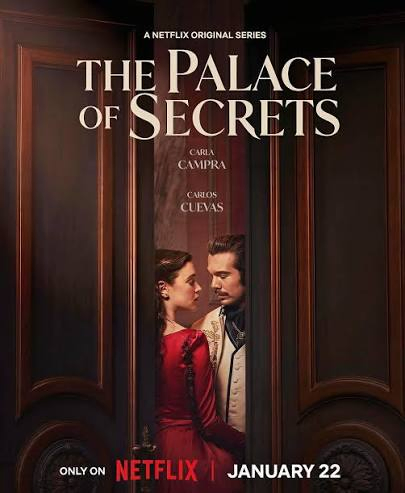
Spanish historical romance is preparing for a new international streaming release. The Palace of Secrets, an adaptation of a novel by Estefanía Ruiz, has a confirmed worldwide premiere on January 22, 2027. That date was announced on November 16, 2026, alongside a first look at the production. With the premiere still ahead, the useful question is what the series has actually established about its story, performers and creative team, rather than how the finished drama will ultimately be received.
The central pairing brings Carla Campra and Carlos Cuevas into a palace governed by duty, succession and competing personal ambitions. Campra plays Julia Ponce, the daughter of a court painter. Cuevas plays Gonzalo, a crown prince whose return to Spain is connected to the king's insistence that he marry. Their meeting sets a romance against a political system in which individual choices can carry consequences for families and the court itself.
The January 22 Release and What It Confirms
The January 22 date is a worldwide Netflix premiere, not a regional theatrical opening or a festival screening. That distinction matters for an international audience because the announcement describes a single global streaming destination. It does not, however, establish a particular release hour in every territory, the final episode count or the availability of specific audio and subtitle tracks. Those details should be checked when the service updates its regional title pages closer to release.
A first look offers viewers a preliminary sense of costume, setting and visual identity, but promotional imagery cannot substitute for an assessment of the finished episodes. A trailer may communicate mood and the attraction of the central relationship while leaving significant elements of character development and political intrigue unrevealed. This preview therefore treats visual materials as invitations to watch, not evidence of critical or commercial success.
Why the schedule still matters
For readers following international series calendars, announcing the date in mid-November creates a clear reference point more than two months ahead of the debut. It also allows audiences unfamiliar with the source novel to discover the principal characters without confusing earlier production announcements with a completed release. The distinction between the November news event and the January premiere is essential when revisiting the story later.
Julia and Gonzalo: The Heart of the Story
Julia's entrance into the royal palace begins with fascination. As the court painter's daughter, she can observe spaces and rituals that are normally organised around rank, influence and access. Her proximity to the royal household makes her both an observer and a participant. The dramatic tension is not simply that she falls in love with a prince, but that this attachment places her in direct conflict with the structure that defines his future.
Gonzalo's position carries its own contradiction. The crown prince has been summoned home to fulfil a dynastic expectation, yet his developing connection with Julia pulls him toward a personal commitment that cannot easily coexist with that duty. The announced premise suggests a struggle between public obligation and private feeling. Whether the screenplay grants both characters equal agency, and how it handles their choices, will only be clear after release.
Power behind the palace doors
The disclosed storyline includes court celebrations, clandestine meetings and a secret society of women manoeuvring for power. These ingredients broaden the premise beyond a straightforward forbidden-love narrative. They create the possibility of parallel struggles over influence, loyalty and reputation. Still, the announcement does not establish the identity or fate of every participant in that society, so claims about its eventual victories or betrayals would be premature.
The Cast and the Creative Team
Campra's previous screen work includes Holy Family and Dangerous Moms, while Cuevas has appeared in Smiley and The 47. These credits give international viewers an immediate frame of reference for the two leads without implying that their performances in this series have already been judged. Their ability to make the central relationship believable will be important to a story built around emotional restraint, social differences and the risks of intimacy at court.
The announced ensemble also includes Alberto Olmo, Luís Bermejo, María Morales, Roberto Álamo, Bea Segura, Helena Ezquerro, Nora Hernández, Nico Romero, Cristina Plazas, Karina Soro, Guillermo Toledo, Irene Montalà and Catalina del Rosario. The breadth of this cast suggests a court populated by more than a small circle of romantic rivals. Specific character arcs, however, should not be invented where the confirmed announcement identifies performers without explaining their full roles.
Multiple directors, one narrative
Carlos de Pando and Sara Antuña created the television adaptation. Direction is credited to Paco Caballero, Jota Linares and Elena Trapé. A production with several directors has to maintain consistency in the relationships, tone and visual grammar of the story across episodes. That is a meaningful artistic question to revisit in a later review, but it is not a reason to predict either fragmentation or cohesion before the audience can see the completed work.
From Estefanía Ruiz's Novel to a Screen Drama
Adapting a novel built around forbidden affection and court politics presents decisions that differ from those involved in writing an entirely original television story. A book can linger inside a character's thoughts, whereas television must express those conflicts through behaviour, dialogue, staging and performance. The series may also have to find a rhythm that makes alliances and rivalries legible to viewers who have never encountered the literary material.
The adaptation's premise already combines two scales. At the intimate level, Julia and Gonzalo must negotiate their relationship; at the larger level, the royal household is a place where marriage, ambition and access shape power. The strongest potential lies in the tension between those scales, not merely the spectacle of expensive surroundings. Whether that potential becomes convincing drama is a matter for a full review after January 22.
Production Context and the International Audience
Zeta Studios is producing the series for Netflix. The company is associated with other Spanish and international-facing productions including Olympo and Élite. Antonio Asensio is credited as producer, while Xavi Toll and Margarita Huguet are among the executive producers alongside the creators. Those credits help identify the organisations and people responsible for making the adaptation, rather than suggesting that a previous hit automatically guarantees another.
The period setting gives the project a recognisable genre identity, while the combination of romance and concealed political manoeuvring may appeal to audiences that enjoy character-led costume dramas. International distribution also means viewers will encounter the narrative from different cultural perspectives. A globally available release is not the same as proof of global popularity, and no audience figures or rankings exist for a series that has yet to premiere.
What Remains Unconfirmed
Several practical questions remain open. The announcement establishes the January 22 date, premise, named leads and principal creative team, but it does not supply a complete episode-by-episode guide or the final language options for every country. It also does not reveal the ending, the precise balance between romance and political intrigue, or the eventual response from critics and subscribers. Treating those gaps as genuine unknowns protects readers from promotional speculation becoming mistaken fact.
Viewers seeking the most dependable information should distinguish the official release notice from subsequent commentary and promotional predictions. Further trailers, interviews and local streaming listings may add details in December and January. If release information changes, any retrospective article should be updated with the new date rather than retaining an obsolete promise. The value of historical coverage is its accuracy when somebody encounters it later.
Final Outlook
The Palace of Secrets enters the 2027 calendar with a defined release date, a recognisable romantic conflict and an extensive Spanish ensemble. Its creative team is adapting a literary story whose central concerns are intimacy, status and political ambition. These are substantial foundations for a preview, but not substitutes for viewing the series. The appropriate next editorial milestone is a performance-focused and screenplay-focused assessment once the finished episodes are available.
For now, the confirmed picture is clear: the November 16 announcement introduced a January 22 global Netflix premiere and identified the people bringing Julia and Gonzalo's forbidden relationship to the screen. The remaining questions concern execution, storytelling and reception. Those should remain questions until the series is released, allowing readers to understand the project without mistaking anticipation for an established verdict.
PUBLISHED BY SUYASH PACHAURI, FOUNDER & OWNER, GLOBAL BOLLYWOOD | THE HOLLYWOOD SCOPE.