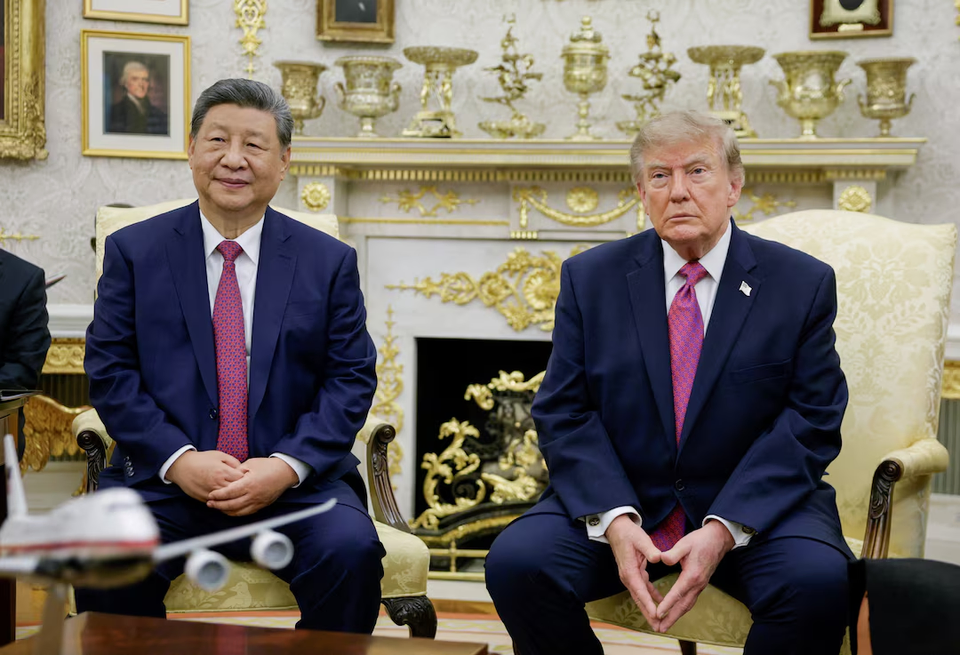
High-Profile Optics, Limited Public Results
The latest meeting between United States President Donald Trump and Chinese President Xi Jinping delivered carefully staged images of engagement but few public signs of movement on the hardest disputes between the two countries. Xi greeted Trump at the airport before meetings connected to the Asia-Pacific summit in Shenzhen, and the gathering included the first trilateral session involving the American, Chinese and Russian leaders. The ceremony reinforced the appearance of active great-power diplomacy.
Substance was harder to identify. Washington has sought increased purchases of American farm goods, relief from restrictions on rare-earth supplies, progress for Americans it considers wrongfully detained and clearer commitments on trade. Public statements did not announce major breakthroughs on those demands. Beijing instead emphasised a broad framework for strategic stability without supplying detailed targets or deadlines.
How the Holding Pattern Benefits Beijing
A prolonged dialogue without immediate concessions gives China time and leverage. Beijing can present itself as a central participant in global problem-solving while deciding how quickly to fulfil existing commitments. Hosting a meeting that brought together Trump and Russian President Vladimir Putin also allowed Xi to appear as a convener capable of managing relationships that shape security, energy and trade.
China has delivered part of its agricultural purchasing commitments but retains influence through rare-earth exports, market access and the pace of broader trade compliance. By keeping negotiations open, it reduces the risk of an abrupt breakdown while preserving bargaining tools for the next round. Analysts describe that space as strategically useful because Washington is simultaneously tightening technology controls and facing pressure from lawmakers to take a harder position.
Chips and AI Are Becoming the Central Contest
The relationship is increasingly defined by access to advanced computing. New American restrictions seek to prevent Chinese organisations from obtaining cutting-edge AI chips through overseas data centres and other indirect routes. China views those measures as an attempt to constrain its technological development, while Washington describes them as national-security safeguards.
The summit occurred as fresh controls were taking effect, yet the public Chinese account did not identify a compromise on chips. That silence matters because semiconductors connect commercial rivalry to military power, surveillance and industrial policy. Both countries are building domestic supply chains and testing the other's dependence on specialised equipment, minerals and manufacturing capacity. A trade truce can moderate tariffs without resolving this deeper competition.
Taiwan, Trade and Detentions Remain Unresolved
Xi again stressed that Washington should handle Taiwan in a way Beijing considers correct. China claims the democratically governed island as its territory, while Taiwan rejects that claim. The issue remains one of the most dangerous fault lines in the relationship because diplomatic language, arms sales and military activity can change perceptions of deterrence even without a formal policy shift.
Other disputes remain practical and immediate. The current trade truce expires in January, rare-earth shipments have not fully returned to earlier levels, and the two detained Americans highlighted by Washington have not been released. China also has not completed all the farm purchases expected by the United States. These unresolved files create multiple opportunities for escalation before the leaders' next expected meeting.
The Next Meeting Will Test Whether Stability Has Substance
Trump and Xi are expected to meet again at the Group of Twenty summit in Miami. By then, both sides will need to decide whether to extend the trade truce and convert broad statements into measurable actions. Agricultural purchases, mineral flows, chip rules and the treatment of detainees offer concrete indicators that can be assessed without relying on ceremonial language.
For now, the summit lowered the temperature without settling the argument. That may be valuable when both governments have reasons to avoid an immediate crisis. It also leaves China with time to strengthen its position and the United States with limited evidence that repeated leader-level meetings are producing concessions. The relationship is not frozen, but it is moving through a managed holding pattern. Whether that pattern becomes durable stability or simply postpones a sharper clash will depend on what each side does before January.
Allies and trading partners will judge the process through their own interests. Asian manufacturers need predictable access to chips and minerals, farmers want dependable export demand, and governments near Taiwan want reassurance that competition will not become conflict. Russia's presence added another layer because cooperation among the three leaders can affect Ukraine, energy markets and sanctions. The summit's significance therefore lies partly in what it failed to settle: several linked disputes remain exposed to a single retaliatory decision.
Measured diplomacy can still produce value if it creates working-level channels, reduces miscalculation and sets deadlines for concrete decisions. The danger is that repeated spectacle becomes a substitute for progress. By the next meeting, the strongest evidence will not be another handshake. It will be a record of purchases made, restrictions eased or tightened, detainees released and commitments honoured. That record will define whether stability is genuine.
PUBLISHED BY SUYASH PACHAURI, FOUNDER & OWNER, GLOBAL BOLLYWOOD | THE HOLLYWOOD SCOPE.