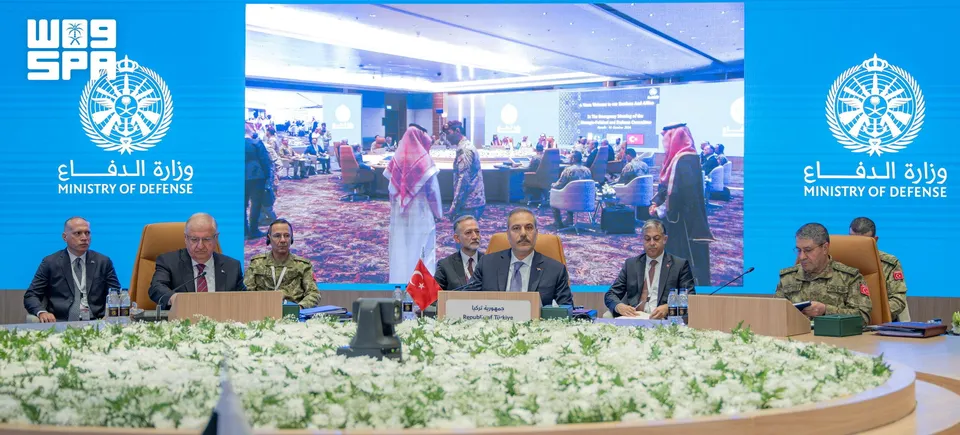
Turkey is providing Saudi Arabia with military equipment, intelligence and defensive expertise as the kingdom responds to escalating attacks by Yemen's Houthi movement. The assistance follows the Mecca Joint Defence Agreement signed by Turkey, Pakistan and Saudi Arabia, which treats an armed attack on one member as an attack on all. Turkish support currently emphasizes air defence, logistics, planning and drone operations rather than a broad combat deployment. The arrangement could reshape regional security around the Red Sea, but its effectiveness and political limits will depend on parliamentary approval, command structures and whether the partners can prevent further escalation.
What Turkey Is Providing to Saudi Arabia
Officials describe the support as mainly technical and defensive. It includes weapons systems, intelligence sharing, air-defence capabilities, strategic planning and help with logistics. Drone operators and specialists are expected to assist in refining protective measures. For now, much of the cooperation is bilateral because Turkey's parliament has not formally ratified the agreement. The scale could increase after ratification, but there is no confirmed broad Turkish troop deployment under the pact. That distinction matters because equipment and advisers carry different political and operational risks from combat forces.
Pakistan and Turkey have also supplied military equipment used by Saudi forces during operations connected to Yemen. The partners announced that they would move quickly to implement collective-defence commitments and enable rapid deployment of capabilities. Converting that promise into a functioning alliance requires common communication systems, rules for sharing intelligence and agreement about who authorizes action. Without those mechanisms, public solidarity may not produce faster decisions during a missile or drone attack.
Houthi Attacks Have Raised the Stakes
The Houthis have launched missiles and explosive drones against Saudi targets while fighting intensifies around Aden and the Bab el-Mandeb Strait. The waterway is a critical route for trade and energy shipments, especially when traffic through the Strait of Hormuz is disrupted. A threat to both passages would place extraordinary pressure on shipping, insurance and fuel markets. Saudi Arabia therefore has a direct interest in strengthening air defence and protecting navigation, while Turkey gains an opportunity to demonstrate the value of its defence industry and regional diplomacy.
Air defence against drones and missiles is expensive and technically demanding. Attackers can launch cheaper systems in numbers, forcing defenders to choose which threats require high-cost interceptors. A layered network combines radar, electronic warfare, short-range weapons and larger missiles. Intelligence can provide earlier warning about launch sites and routes. Turkey's experience with drones and electronic systems may complement Saudi purchases, but integration must be carefully tested to avoid gaps or friendly interference.
The New Alliance Has Strategic Ambitions
The Mecca agreement links a NATO member, a nuclear-armed South Asian state and the Gulf's largest economy. Each participant brings different capabilities and relationships. Turkey has a large military and expanding defence industry. Pakistan has deep security ties with Saudi Arabia. Riyadh provides financial resources and strategic geography. Their cooperation may reduce dependence on traditional outside partners, but it also creates questions about how the pact interacts with NATO obligations, existing bilateral agreements and the wider balance with Iran.
Defence Must Be Paired With De-escalation
Improved protection can deter attacks by reducing their chance of success. It can also create confidence for diplomacy. Yet a rapid military buildup may be interpreted as preparation for wider intervention, increasing the risk of miscalculation. The partners should communicate the defensive scope of deployments and maintain channels that can prevent accidental escalation. Humanitarian conditions in Yemen remain severe after years of conflict, so military measures should be accompanied by efforts to protect civilians, keep aid routes open and revive a political process.
The alliance will also be judged by command discipline. Drone warfare produces fast-moving situations in crowded airspace, and incorrect identification could harm civilian aircraft or neighboring states. Shared rules of engagement, identification procedures and incident investigation are essential. Parliament and the public need enough information to understand the mission without exposing operational details. Oversight can strengthen legitimacy and reduce the risk that temporary defensive support expands into an undefined commitment.
A Regional Security Test With Global Consequences
Turkey's support to Saudi Arabia is an early demonstration of what the new pact means in practice. If the alliance improves detection, interception and maritime safety, it could stabilize a trade corridor used by the entire world. If coordination remains unclear or the mission expands without political agreement, it could deepen regional confrontation. The immediate priority is protecting people and infrastructure from missile and drone attacks. The longer-term challenge is building security arrangements that deter violence without locking the Red Sea and Yemen into another cycle of escalation.
PUBLISHED
BY
SUYASH PACHAURI,
FOUNDER & OWNER,
GLOBAL BOLLYWOOD | THE HOLLYWOOD SCOPE