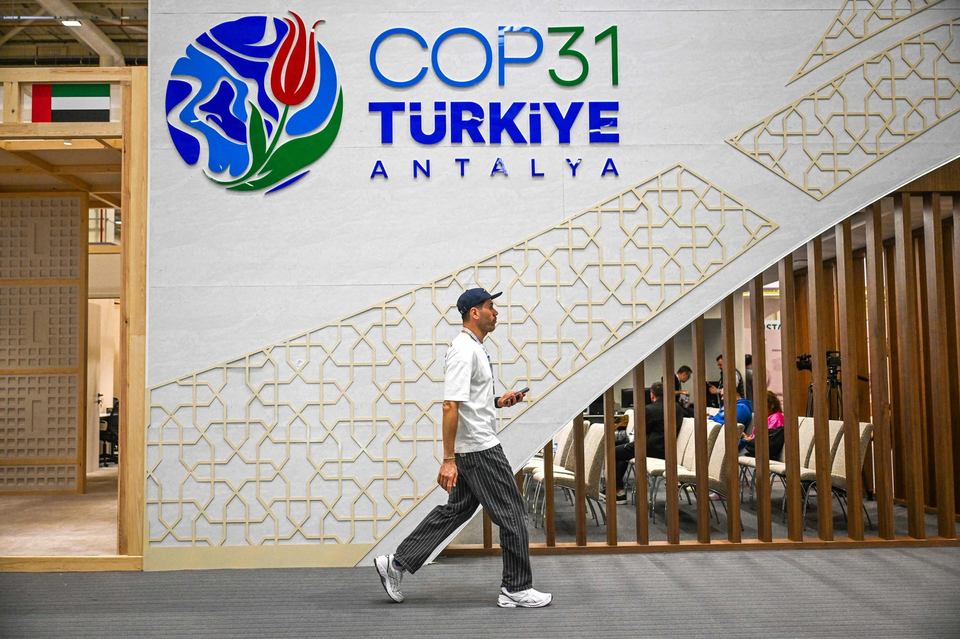
On 12 November 2026, Türkiye and the Asian Infrastructure Investment Bank signed a USD 1.6 billion climate policy financing package during COP31 in Antalya. The signature gave public form to a programme designed to turn national climate legislation into operational rules for finance, energy, industry and local adaptation. The financing had received approval on 22 October, so the November development is properly described as the signing of an approved programme, not an entirely new approval. That distinction matters when assessing what has been agreed and what still must be delivered.
The programme remains relevant beyond its announcement because its stated objectives run through 2027, 2028, 2035 and Türkiye's longer-term net-zero ambition for 2053. Readers following industrial competitiveness, electricity investment, agricultural water stress and public finance have practical reasons to watch its implementation. The value of this agreement will not be determined by the size of the headline alone. It will depend on whether new institutions, reporting requirements and investment channels translate into measurable changes.
A Financing Package Built Around Policy Reform
The USD 1.6 billion package combines two equal USD 800 million components. One is a climate-focused policy-based financing loan for the Türkiye Climate Action Acceleration Program. The other is supplemental financing under an energy, food security and economic resilience facility. Both are connected to a common reform programme rather than being presented as separate announcements about individual power plants or construction projects. The project material identifies twelve prior actions that support the programme's objectives.
Policy-based finance is fundamentally different from an announcement that a named wind farm has been commissioned or a new railway completed. It supports a government-led framework intended to make future activity possible, better regulated or more resilient. The result can therefore appear first in legislation, administrative coordination, market rules and institutional capacity. These are less immediately visible than a ribbon cutting, but they can shape how capital is allocated across an economy for years.
Three Pillars Connect Finance, Emissions and Resilience
The first pillar concerns sustainable finance and the regulatory structures needed to direct investment toward lower-carbon activities. It includes work to operationalise an emissions trading system and develop a framework for green finance. The second pillar concerns sectoral decarbonisation, turning national commitments into action across energy, industry, transport and emissions monitoring. The third addresses climate resilience through institutions responsible for water, natural ecosystems and health. These pillars are connected, because cleaner investment decisions are harder to sustain when climate hazards repeatedly disrupt communities and economic activity.
Türkiye's Climate Law and its second nationally determined contribution provide the policy setting. The contribution includes an emissions target for 2035, while the national pathway identifies net-zero emissions in 2053. Neither date means that the objectives have already been achieved. The financing agreement is intended to support their implementation. A distinction between an adopted target, a funded reform and a verified environmental outcome should remain central to future coverage.
Carbon Market Rules Will Be an Early Test
An emissions trading system requires more than a legal announcement. Facilities must understand what emissions they must measure, how figures are verified and what allowances or compliance obligations apply. One announced programme milestone calls for at least 180 facilities to report baseline emissions by April 2027. That is an administrative and measurement milestone, not proof that those facilities have already reduced emissions. Consistent reporting would create the information needed for credible future comparisons.
The carbon-market design may also matter for exporters of energy-intensive products. European carbon-border rules create a commercial reason for industries such as steel and cement to understand the emissions embedded in production. A credible domestic system can make companies' reported figures and carbon costs more legible across borders, though actual treatment depends on the applicable rules. For businesses, the near-term question is whether reporting becomes dependable and compliance responsibilities are clear, not whether a market mechanism immediately removes every competitiveness pressure.
Clean Power Needs a Route From Licences to Operation
The programme includes an objective associated with production licences for 1,800 megawatts of wind and solar capacity by early 2027. A licence is a necessary step in some project pathways, but it is not the same as an operational plant supplying electricity. Real construction requires sites, grid connections, equipment, finance and delivery schedules. Reporting future progress should therefore separate licences issued from capacity installed, connected and generating power.
Türkiye also has a wider economic incentive to reduce its exposure to imported fossil fuels. Energy imports can affect the current account and expose households and firms to international price shocks. More domestic clean electricity could improve resilience if investment is matched with grid upgrades, storage and demand management. The financing package does not by itself guarantee those outcomes. Its contribution lies in improving the policy and investment conditions in which such projects can move forward.
Water, Farming and Local Adaptation
The climate resilience component reaches beyond electricity and heavy industry. Programme targets include assisting 225,000 farmers in water-stressed basins to move toward less water-intensive crops by 2028. Such a shift could help limit exposure to scarcity, but it also raises questions of farmer income, regional suitability, agricultural support and access to reliable advice. A numerical adoption target should eventually be evaluated alongside water savings and farmers' economic outcomes.
Another objective concerns the designation of 50,000 hectares as carbon sinks by 2028. Designating land is not the same as demonstrating a precisely quantified amount of long-term carbon removal. Soil, forests and other ecosystems require monitoring, protection and care. Climate reporting should avoid equating a planned area with a verified emissions offset. These distinctions matter because the physical effects of heat, drought, flooding and wildfire can persist regardless of the pace at which policy documents are completed.
How the Financing Is Intended to Reach Institutions
The programme is led by the Turkish government. The Ministry of Treasury and Finance coordinates implementation, while environment and climate authorities provide technical leadership. Financial regulators, energy authorities and other departments are involved, and subnational climate governance is expected to extend across the country's 81 provinces. That broad reach is ambitious: nationwide change cannot rely only on a central ministry issuing a set of targets.
Coordination will determine whether the three pillars reinforce one another. For example, carbon reporting requires reliable industry data, climate-resilient farming requires regional delivery and green finance requires institutions able to assess projects consistently. The financing can create incentives to strengthen those systems, but implementation still depends on administrative capacity and transparent follow-through. The appropriate public question is which actions have actually been carried out, by which institutions and according to what evidence.
Why the November Agreement Still Matters
The timing of the signing placed a country-level reform package beside international negotiations about finance and the transition away from fossil fuels. That made the programme a practical example of how broad climate promises can be translated into domestic arrangements. Its significance should not be confused with the outcome of COP31 as a whole, which involves many governments and separate negotiating tracks. A financing signature by itself does not settle disputes about global adaptation finance or emissions commitments.
The agreement also illustrates a continuing challenge for developing and emerging economies. Public finance can help establish rules and absorb some risks, yet private investors still need workable projects, predictable regulation and credible long-term demand. Funding for policy reform is therefore only one stage of a larger implementation chain. The full benefit will be clearer when institutions publish progress on specific targets and when businesses and communities can demonstrate results.
The Milestones Readers Should Track Next
The nearest observable checkpoints are the early-2027 clean-power licensing objective and the April 2027 emissions reporting milestone. Later indicators include the 2028 farming and carbon-sink targets. Beyond those dates, progress toward the 2035 national contribution and the 2053 net-zero pathway will require successive rounds of measurement, investment and adjustment. Any follow-up assessment should report whether a target was met and explain the method used to determine that outcome.
For now, the carefully supported conclusion is that Türkiye signed a substantial policy-based climate financing agreement on 12 November, with previously approved funding attached to a detailed reform agenda. The country has not thereby completed its transition, and neither has the funding automatically produced the projected benefits. The enduring story is the test of execution: whether financial support can help turn statutory ambition into reliable carbon accounting, cleaner investment and more resilient communities.
PUBLISHED BY SUYASH PACHAURI, FOUNDER & OWNER, GLOBAL BOLLYWOOD | THE HOLLYWOOD SCOPE.