Unabomber attempts to explain how a gifted teenage mathematician became a domestic terrorist while also dramatizing the investigation that ended one of America's longest manhunts. Directed by Janus Metz and written by Sam Chalsen and Nelson Greaves, the Netflix film divides its attention between Ted Kaczynski's early years and an FBI pursuit decades later. The structure promises a conversation between cause and consequence, but the movie too often reduces history to a sequence of provocative connections.
Jacob Tremblay plays the young Kaczynski, who enters Harvard at sixteen and becomes a subject in controversial psychological experiments overseen by professor Henry Murray, played by Russell Crowe. Shailene Woodley portrays Joanne Miller, a fictionalised agent who provides the audience's route through the later investigation. Annabelle Wallis, Alexander Ludwig, Steven Ogg and Marc Menchaca appear in the supporting ensemble. The cast gives the production authority, but performance cannot supply the ethical clarity missing from the screenplay.
A Divided Timeline Without a Clear Argument
The film moves between academic pressure, family alienation, psychological testing and the federal hunt. In theory, the two timelines should complicate each other. The young man's humiliation could be placed against the suffering caused by the adult terrorist, preventing either biography or procedural suspense from dominating. In practice, the editing often treats proximity as explanation. An upsetting experiment is followed by a later act of violence, encouraging a causal interpretation the film has not adequately examined.
That is a serious problem in a story involving real victims. A drama may investigate the formation of violent ideology, but it must distinguish understanding from excuse. Unabomber repeatedly gestures toward social disenfranchisement, isolation and institutional abuse without developing a rigorous account of choice. The result is psychologically thin. Kaczynski becomes a collection of wounds leading toward a destination the audience already knows, while the people harmed by his campaign remain largely outside the emotional frame.
Jacob Tremblay and Russell Crowe Create Uneasy Tension
Tremblay gives the younger Ted a brittle intelligence and an increasingly defensive physicality. He avoids easy theatrical madness, which is the correct instinct. The performance is strongest when Ted's need for recognition collides with his suspicion of everyone offering it. Tremblay suggests a mind that experiences ordinary interaction as evaluation, although the screenplay frequently asks him to signal a transformation rather than discover it scene by scene.
Crowe brings intimidating calm to Henry Murray. His authority fills the room before the experiments begin, and his controlled attention makes manipulation feel clinical. Yet the character is used too neatly as an origin-point antagonist. Historical complexity is compressed into a relationship that the film can photograph and dramatize. Crowe makes those scenes compelling, but their intensity risks overstating the certainty of the movie's thesis.
Shailene Woodley's Investigation Needs More Space
Woodley's Joanne Miller is positioned as the viewer's moral and procedural guide. Because the character is fictionalised, she could have allowed the screenplay to question its own assumptions. Instead, the investigation often functions as a delivery system for information and suspense. Woodley gives Miller alertness and resolve, but the film grants her limited personal dimension. The FBI material also competes with the Harvard timeline for attention, leaving both strands feeling abbreviated.
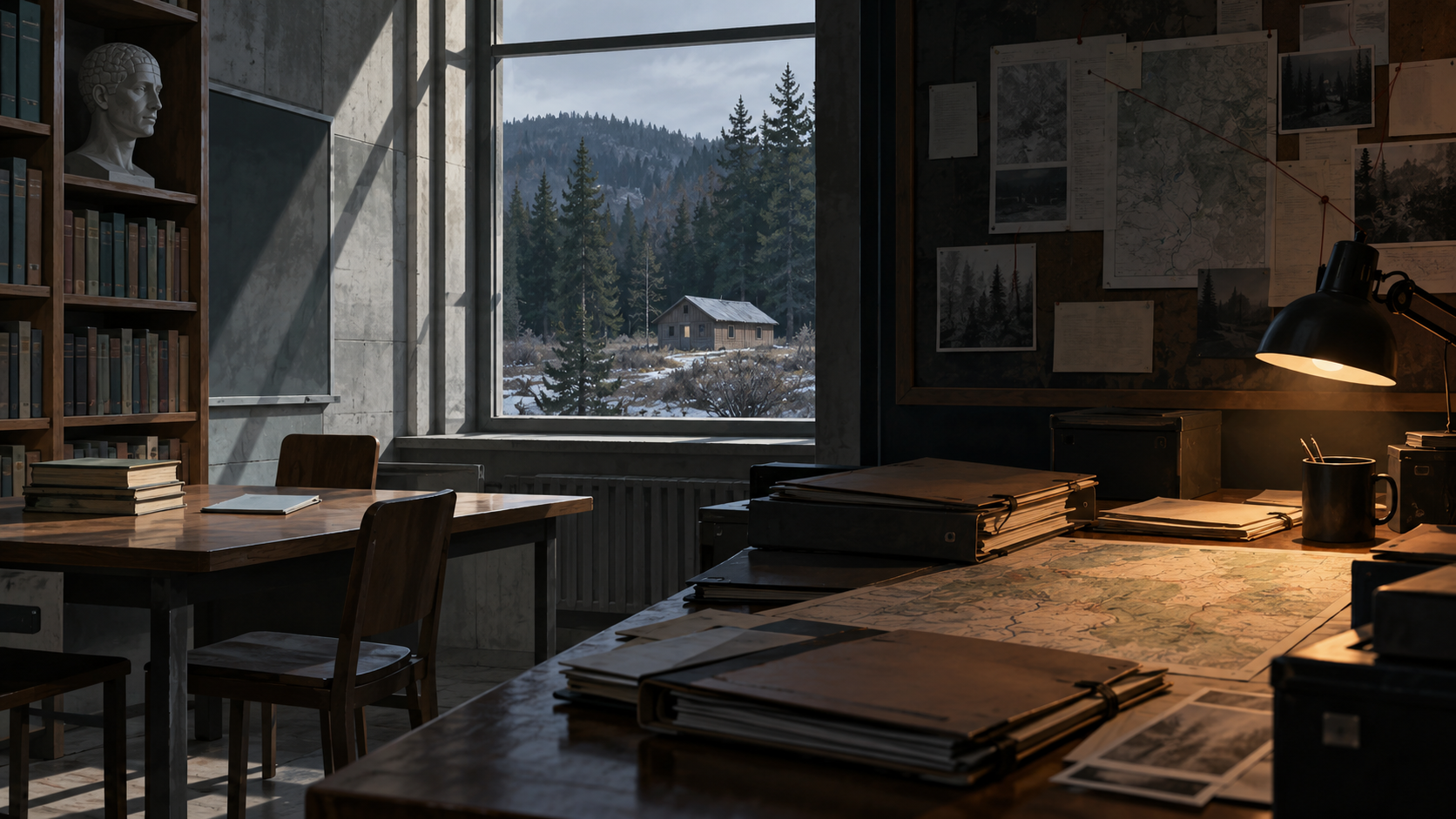
Metz and cinematographer Yves Bélanger create an attractive contrast between burnished academic interiors and the colder textures of the manhunt. The film is polished, controlled and easy to follow. That professionalism becomes part of the discomfort. A story this morally difficult should not feel so tidily packaged. Moments of victim trauma are deployed for tension, and the production rarely pauses long enough to consider the human cost beyond the mechanics of the case.
Unabomber Review Verdict
Unabomber is not without craft. Tremblay commits to a demanding role, Crowe supplies formidable presence and Woodley gives the investigation a needed centre of gravity. The parallel structure creates momentum, and several scenes generate genuine unease. These strengths make the missed opportunity more frustrating.
The film needed a clearer moral perspective and a more disciplined examination of the gap between suffering and violent choice. Instead, it offers an oversimplified psychological pathway while giving insufficient weight to victims and ideology. Viewers may find the performances absorbing, but the drama remains less insightful than its subject demands. As a true-crime thriller, Unabomber is watchable. As an attempt to explain a terrorist's formation, it is shallow, speculative and ultimately unsatisfying.
The central critical distinction is between portraying a possible influence and demonstrating a cause. A performance can make a relationship dramatically persuasive without making the explanation historically conclusive. The film's treatment of that distinction deserves as much scrutiny as its suspense.
PUBLISHED BY SUYASH PACHAURI, FOUNDER & OWNER, GLOBAL BOLLYWOOD | THE HOLLYWOOD SCOPE