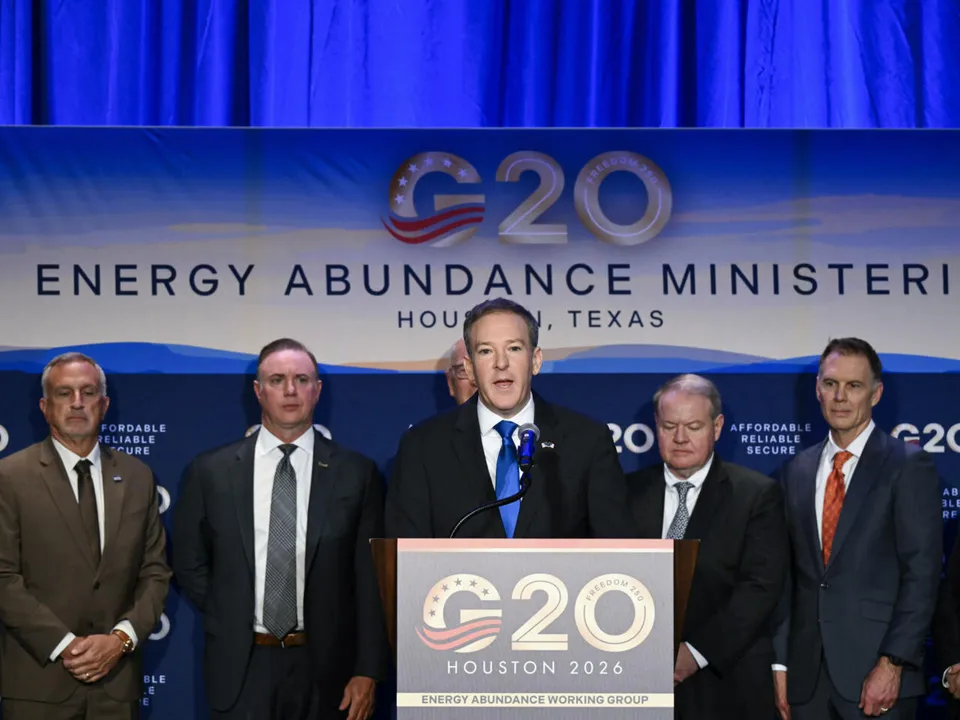
US climate rollbacks has moved into focus after a significant new development with implications extending well beyond the immediate headline. For "US Climate Rollbacks at G20 Put Power Plant Carbon Rules", the next reliable assessment should come from verified follow-up actions and measurable outcomes rather than another repetition of the initial reaction.
For "US Climate Rollbacks at G20 Put Power Plant Carbon", the next useful test is whether later evidence changes the present assessment rather than repeating the initial interpretation. In "US Climate Rollbacks at G20 Put Power Plant Carbon Rules", the strongest evidence will come from what changes in practice once the immediate attention surrounding the development begins to settle. This detailed analysis explains the confirmed facts, the wider context, the likely industry or policy impact and the key developments to watch next.
Why This Development Matters
The longer-term meaning of "US Climate Rollbacks at G20 Put Power Plant Carbon Rules" will become clearer through concrete decisions, implementation and results that can be checked independently. For "US Climate Rollbacks at G20 Put Power Plant Carbon", the stronger basis for judgment will be whether verified follow-up changes the present assessment rather than repeating the initial interpretation. The story of "US Climate Rollbacks at G20 Put Power Plant Carbon Rules" therefore needs to be judged by subsequent milestones, not simply by the intensity of its first news cycle. The immediate headline is only the starting point.
The larger significance lies in how this development changes expectations in its sector and what it reveals about the direction of policy, investment, technology or audience behaviour. For readers searching for US climate rollbacks, the essential question is not simply what happened but why the development has emerged now and what practical consequences could follow.
For the story around "US Climate Rollbacks at G20 Put Power Plant Carbon Rules", the first burst of attention is only one part of the picture. A more durable assessment depends on what happens after the announcement, including concrete decisions, implementation and results that can be independently observed. Those later signals will show whether the development changes expectations in a lasting way or simply dominates the news cycle for a short period.
The Wider Context Around US climate rollbacks
The story sits inside a much broader transition. power plant carbon rules and G20 energy meeting have become increasingly important search themes because institutions, companies and governments are being forced to make decisions faster than traditional planning cycles once required. That creates a gap between a headline announcement and its eventual real-world impact. Understanding that gap is essential because early excitement or concern can change quickly when implementation details, costs, technical limitations or political constraints become clearer.
The next test for "US Climate Rollbacks at G20 Put Power Plant Carbon Rules" is execution rather than publicity. Immediate reaction can shape perception, but long-term significance comes from decisions that are carried through, measurable outcomes and a clear response from the institutions or people involved. Watching those elements offers a stronger basis for judging the story than relying on the headline alone.
What Changes in the Short Term
The context surrounding "US Climate Rollbacks at G20 Put Power Plant Carbon Rules and Deep-Sea Mining Back in Focus" deserves its own reading. The immediate development establishes an important reference point, but the more revealing evidence will come from later decisions, implementation and measurable results. Those signals will show whether the story changes behaviour or strategy in a lasting way rather than simply creating a short burst of attention.
Seen through the lens of "US Climate Rollbacks at G20 Put Power Plant Carbon Rules", the development should be judged in stages. The confirmed facts establish the starting point, while later choices, performance and public response will determine how much the story ultimately matters. That distinction is useful because expectations can move quickly even when the practical consequences take much longer to become visible.
Industry and Market Implications
The commercial implications could extend beyond the organizations directly named in the headline. Developments involving power plant carbon rules often influence investment decisions, supply chains, pricing, competitive strategy and consumer expectations. Companies operating in adjacent markets may need to reconsider their own plans if the development creates a new benchmark.
For "US Climate Rollbacks at G20 Put Power Plant Carbon Rules and Deep-Sea Mining Back in Focus", the next useful question is how the confirmed development translates into practice. Public reaction can move quickly, while operational change usually takes longer. Tracking concrete follow-up, delivery and independently visible outcomes will provide a stronger measure of significance than repeating the expectations created by the original headline.
With "US Climate Rollbacks at G20 Put Power Plant Carbon Rules", attention now shifts from the initial development to the evidence that follows it. Announcements can change expectations immediately, yet lasting impact depends on implementation, measurable progress and the ability of the relevant organisations to deliver on what the moment appears to promise. The next verified milestones will therefore be more informative than speculation.
Policy, Regulation and Public Interest
The main uncertainty around "US Climate Rollbacks at G20 Put Power Plant Carbon" lies in what the current facts do not yet settle. Constraints, timing, execution and external reaction may all change the direction of the story. A careful assessment should keep those open questions visible and revise the conclusion only when verified evidence resolves them.
The wider context of "US Climate Rollbacks at G20 Put Power Plant Carbon Rules" matters because major developments rarely remain isolated. Decisions in one area can affect investment, competition, regulation, audience behaviour or institutional strategy elsewhere. The clearest way to understand the longer-term effect is to track verified follow-up actions and distinguish them from assumptions that arise during the first wave of attention.
What Readers Should Watch Next
The most useful follow-up to "US Climate Rollbacks at G20 Put Power Plant Carbon" is a comparison between promise and consequence. What was announced or revealed sets the promise; what happens next shows the consequence. Keeping those two stages separate makes it easier to identify genuine progress, unexpected limits and any material shift in the story.
A useful way to read "US Climate Rollbacks at G20 Put Power Plant Carbon Rules" is to separate what is already confirmed from what still depends on future action. The current development creates a benchmark, but its real weight will be determined by subsequent decisions, implementation and measurable results. That approach keeps the analysis focused on evidence while leaving room for the situation to evolve.
The Bigger Picture
The benchmark created by "US Climate Rollbacks at G20 Put Power Plant Carbon" is useful because later developments can be measured against it. If subsequent actions strengthen the same direction, the significance grows; if implementation stalls or circumstances shift, the interpretation should change. This comparison over time gives the story a fact-based structure instead of a reusable narrative.
The immediate importance of "US Climate Rollbacks at G20 Put Power Plant Carbon Rules" is clear, but the lasting importance will depend on follow-through. Strategy has to translate into execution, and execution has to produce outcomes that can be measured. As more verified information becomes available, it will become easier to tell whether the present shift is structural or temporary.
Conclusion
For "US Climate Rollbacks at G20 Put Power Plant Carbon", the evidentiary standard matters more than the volume of reaction. New documents, confirmed actions, independently measurable results or a material change in circumstances should carry the most weight. Until such evidence appears, the current facts provide a working assessment rather than a final judgment.
For "US Climate Rollbacks at G20 Put Power Plant Carbon Rules", the next phase is likely to be more revealing than the first headline. Initial announcements often create strong expectations, yet the real test comes when organisations, markets or audiences respond in practice. Concrete milestones, rather than repeated commentary, will provide the best indication of whether the development has durable consequences.
PUBLISHED BY SUYASH PACHAURI, FOUNDER & OWNER, GLOBAL BOLLYWOOD | THE HOLLYWOOD SCOPE.