A national production incentive moves closer to the centre of policy
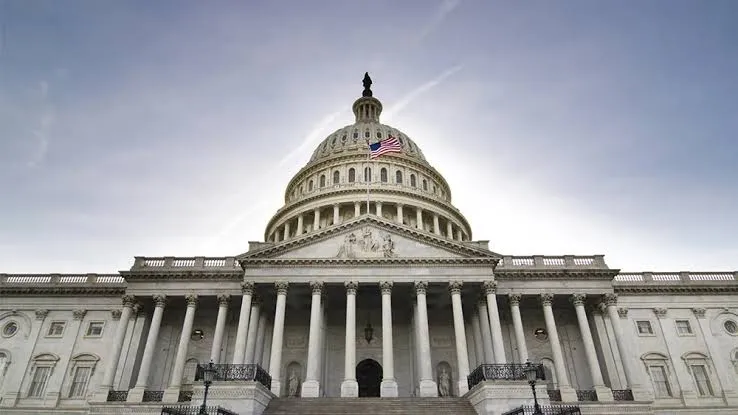
A campaign to establish a US federal film tax incentive has moved into a more consequential phase after the Motion Picture, Television, and Entertainment Revitalization Act attracted more than 60 additional co-sponsors across the House of Representatives and Senate. The measure now has a broader bipartisan foundation than when it was introduced in September, giving the entertainment industry a clearer route to argue that production policy should be treated as a national jobs and competitiveness issue rather than only a state-level concern.
The legislation was introduced by a cross-party group that included Senators Tim Scott and Adam Schiff alongside Representatives Nathaniel Moran, Brian Jack, Linda Sánchez and Laura Friedman. David Kustoff, Judy Chu, Mike Carey and Tom Suozzi were among the early co-sponsors. The growing list does not guarantee passage, but it changes the political context. A proposal that initially looked like a specialised industry request is now becoming part of a wider debate about domestic investment, skilled employment and the movement of large productions overseas.
Why Hollywood wants a federal layer
American states already compete aggressively through their own production credits, rebates and infrastructure programmes. Those schemes can attract a film or series to a particular state, yet they do not address competition from countries that offer nationally coordinated incentives, stable multi-year rules and established studio facilities. Supporters of the federal plan argue that a national layer could complement state programmes and make the United States more competitive when studios decide where to base expensive, labour-intensive projects.
The argument rests on the size of the production economy around a shoot. A major film or television series employs performers, writers and directors, but it also hires construction crews, drivers, caterers, costume makers, visual-effects specialists, accountants and local vendors. Location spending can flow through hotels, equipment companies and small businesses. Advocates therefore frame the US federal film tax incentive as an industrial policy tool with effects that extend well beyond headline talent and studio balance sheets.
The production-flight question
Concern about production leaving the United States has grown as studios seek lower costs and greater certainty. Britain, Canada, Australia and several European territories have developed mature incentive systems supported by crews and soundstage capacity. A project that departs does not merely shift its photography schedule. It can redirect months of wages, supplier contracts and post-production work, weakening the local pipeline that trains the next generation of technicians.
At the same time, a federal credit would face scrutiny over cost, eligibility and accountability. Lawmakers will need to decide what spending qualifies, whether minimum domestic employment thresholds apply, how independent productions are treated and how the programme avoids subsidising activity that would have happened anyway. The strongest version of the policy will need transparent reporting and measurable economic outcomes rather than broad promises about cultural prestige.
Bipartisan support changes the negotiating position
More than 60 new co-sponsors give supporters a larger coalition from which to negotiate, especially because film and television employment is spread across many states. Production hubs such as California, New York and Georgia are central to the conversation, but smaller markets also benefit from location work, regional crews and tourism connected to screen projects. That geographic reach helps explain why the measure can attract lawmakers with very different political priorities.
The bill still has to survive committee work, budget questions and competition from other legislative priorities. Its expanding sponsorship is therefore best understood as momentum, not completion. The next test will be whether supporters can agree on a durable structure and identify a path through both chambers. Industry organisations will also have to show how a federal programme would interact with existing state incentives without producing duplication or administrative confusion.
What the proposal could mean for the industry
If enacted, the incentive could influence decisions made years before audiences see a finished production. Studios lock locations, facilities and crew availability during development and pre-production, so predictable rules matter as much as the headline percentage of a credit. A stable federal framework could encourage longer-term investment in soundstages, training and regional production services, provided the final legislation rewards sustained domestic activity.
For Hollywood, the important development is that the debate has become national and bipartisan. The new co-sponsors do not settle questions about cost or design, but they demonstrate that concerns about production flight have reached a wider group of lawmakers. The proposed US federal film tax incentive will now be judged on whether it can protect skilled work, attract private spending and deliver verifiable benefits without becoming an open-ended subsidy.
What comes next
Attention now shifts from sponsorship numbers to legislative design. Committee language will reveal whether the proposal becomes a transferable credit, a deduction or another mechanism, and which labour, spending and distribution requirements will apply. Those details will decide whether independent producers can use the programme as effectively as major studios.
The industry will also need to publish credible employment and investment evidence. A national incentive will face stronger scrutiny than many state programmes, so supporters must demonstrate additional production rather than simply relocating work within the country. Clear reporting could make the difference between a temporary concession and a durable production policy.
PUBLISHED BY SUYASH PACHAURI, FOUNDER & OWNER, GLOBAL BOLLYWOOD | THE HOLLYWOOD SCOPE.