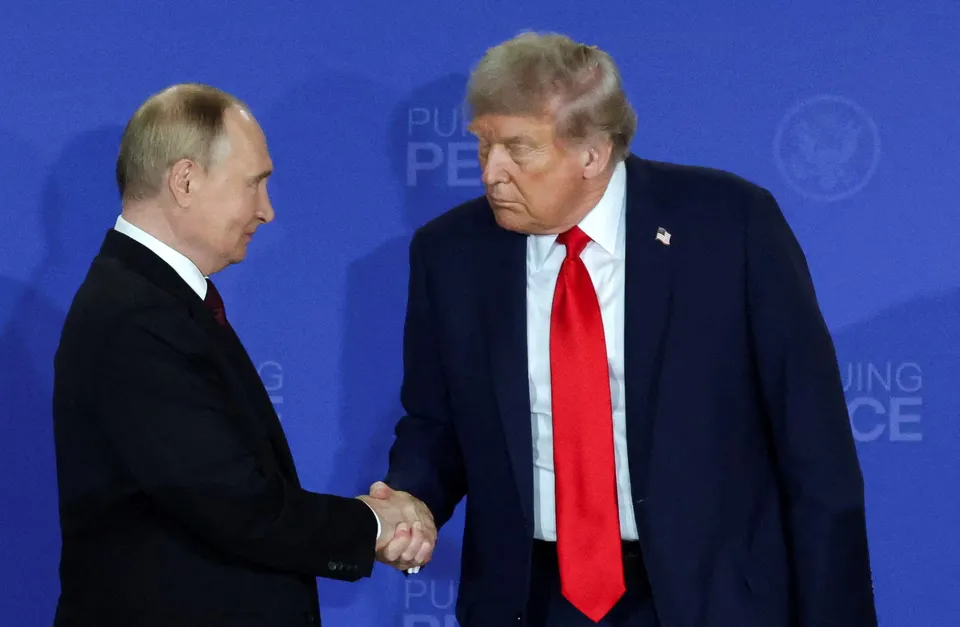
US-Russia Ukraine talks have reportedly widened beyond ceasefire terms and security arrangements to include a proposed multibillion-dollar transaction involving international assets owned by Lukoil. The possible deal links wartime diplomacy with oil fields, refineries, fuel stations, sanctions policy and private investment. It has not been approved, and key institutions have not publicly confirmed that it will proceed. Even so, the proposal illustrates how any attempt to reset relations with Moscow could become entangled with commercial interests and the future control of Russian energy holdings.
What the Proposed Lukoil Oil Deal Could Include
The reported structure concerns a broad portfolio of energy assets around the world rather than a single field or refinery. A group pursuing the transaction is said to include American investor Todd Boehly, two Middle Eastern groups with business links to families connected to US negotiators Steve Witkoff or Jared Kushner, and an arm of the United States government. Any transaction of this scale would require approval from Washington and the Kremlin, especially because sanctions, licensing rules and national security reviews can restrict how Russian assets are financed or transferred.
Russian President Vladimir Putin reportedly raised the idea during a September 5 meeting in Moscow. The political logic was that completing a major commercial deal could demonstrate to Russian audiences that economic ties with the United States remain possible. That symbolism would matter to the Kremlin, which has presented sanctions as an effort to isolate Russia permanently. For Washington, however, a commercial opening would have to be weighed against leverage in negotiations, commitments to Ukraine and the risk that economic benefits arrive before enforceable security concessions.
Why Energy Diplomacy Complicates Ukraine Peace Negotiations
Energy has shaped the war from the beginning. Oil and gas revenue support the Russian state, while sanctions and price controls seek to limit Moscow’s income without creating a global supply shock. European governments have worked to reduce dependence on Russian fuel, and companies have reconfigured trading routes, insurance and shipping. A large Lukoil transaction could alter ownership without necessarily changing production. The important questions would be who receives the proceeds, who controls operations, which sanctions are lifted, and whether future revenue can flow back to Russia.
Sanctions Approval and Conflict-of-Interest Questions
The participation of groups linked through prior business relationships to negotiators’ families would invite intense scrutiny. A lawful deal can still raise ethical concerns if public diplomacy appears to create private opportunities for people close to decision-makers. Clear disclosure of beneficial ownership, financing terms, advisory fees and government participation would be essential. Independent review would also be needed to determine whether the arrangement advances a defined policy objective or simply uses the peace process to unlock valuable assets.
Sanctions relief is usually most effective when it is conditional, reversible and linked to verified behavior. If commercial benefits are granted early, negotiators may lose leverage. If relief is withheld until every dispute is settled, the other side may see little incentive to compromise. A carefully staged agreement could release specific licenses after measurable steps such as a ceasefire, monitoring access or prisoner exchanges. The design would need safeguards against asset transfers that are difficult to reverse once ownership and financing have changed.
What the Proposal Means for Oil Markets
Oil markets would focus less on the headline value of the transaction than on its effect on supply, sanctions enforcement and trading routes. If the same assets continue producing under new ownership, immediate physical supply may change little. Financing costs, insurance access and refinery utilization could improve, however, especially if restrictions are relaxed. A deal might also signal a broader diplomatic thaw, lowering part of the geopolitical risk premium in crude prices. Failure could have the opposite effect if it reveals deeper mistrust or triggers tighter enforcement.
Ukraine and European allies would need a central role in assessing any energy component attached to peace diplomacy. Decisions about Russian assets cannot be separated from reconstruction costs, security guarantees and accountability for wartime damage. A transaction framed as a bridge between Washington and Moscow could undermine unity if Kyiv believes its interests are being traded for commercial normalization. Conversely, transparent use of proceeds for reconstruction or monitored humanitarian purposes could make an economic mechanism more defensible.
For now, the proposed Lukoil oil deal remains a reported possibility rather than a settled agreement. That distinction matters because negotiations often test ideas that never become policy. Still, its emergence shows that US-Russia Ukraine talks may be moving into a phase where energy, sanctions and peace terms are negotiated together. The credibility of any outcome will depend on verifiable security commitments, open conflict-of-interest safeguards and a clear explanation of how commercial benefits serve a durable peace rather than short-term political or private advantage.
PUBLISHED BY SUYASH PACHAURI, FOUNDER & OWNER, GLOBAL BOLLYWOOD | THE HOLLYWOOD SCOPE.