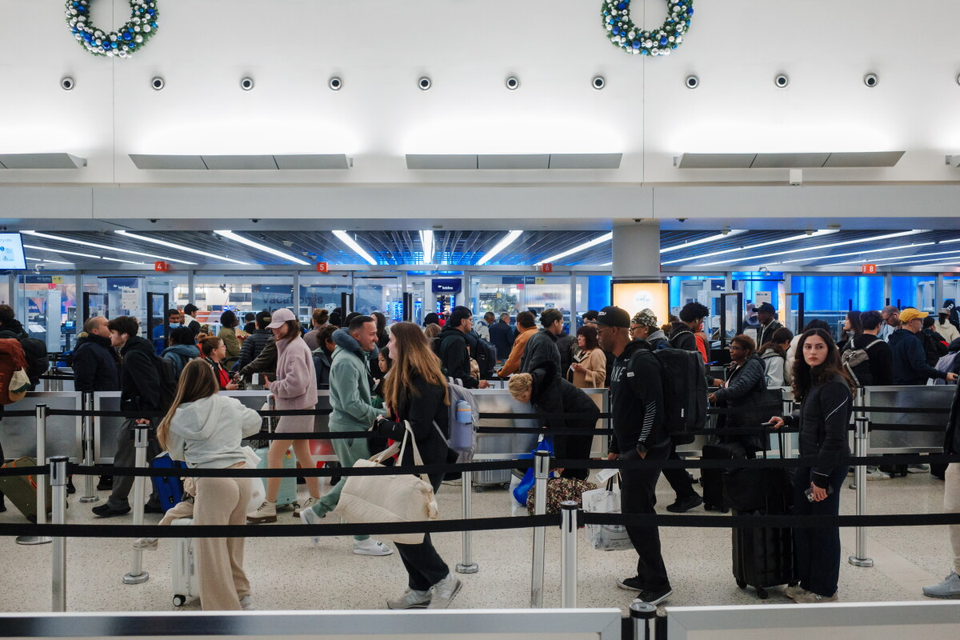
A record-scale holiday movement
The United States entered the Thanksgiving holiday with crowded airports, heavy road traffic and disruptive weather as an estimated 81.5 million people prepared to travel at least 50 miles between Tuesday and Monday. Nearly 73 million were expected to drive, close to 6 million to fly and another 2.6 million to use buses, trains or cruises. The scale turns ordinary delays into a national logistics challenge, since small disruptions can affect connections, rental vehicles and hotel plans across several days.
Airport security lines were already lengthy on Wednesday morning. Reported waits reached 81 minutes at Miami International Airport and about 40 minutes at Newark, New Jersey, and Portland, Oregon. The Transportation Security Administration expected to screen roughly 17.6 million passengers during the holiday period. By Wednesday morning, flight tracking showed more than 1,100 delays and 31 cancellations, although conditions varied significantly between airports and many travellers moved without serious difficulty.
Weather threatens roads and flights
A developing storm along the Eastern Seaboard was expected to bring heavy rain, coastal flooding, strong winds and possible power outages from the Carolinas through the Mid-Atlantic and Northeast. Gusts could reach 50 miles per hour along parts of the Interstate 95 corridor. Florida, the Carolinas, Mississippi and western Washington experienced heavy rain, while winter alerts covered parts of Missouri and Illinois, where snow totals near nine inches were possible around St. Louis.
The West Coast faced a different risk as king tides prompted coastal-flood warnings from Southern California through the San Francisco area and into Oregon and Washington. These overlapping systems complicate both driving and aviation. Airlines may need to reroute aircraft and crews, while flooded roads or snow can make the final trip from an airport harder than the flight itself. Travellers connecting through multiple regions face the greatest chance that one disruption will spread through an itinerary.
Recent technology failures add anxiety
Operational reliability was already under scrutiny after a nationwide aviation network malfunction caused the longest ground stop in 25 years earlier in the month. United Airlines and Delta Air Lines also experienced separate outages that led to hundreds of delays. Those events were not the cause of Wednesday's weather, but they reduced public confidence that systems could absorb another peak. Airlines, airports and federal agencies must manage exceptional volume while ensuring backup procedures are ready if technology fails again.
High fares pushed some travellers toward the roads. Average Thanksgiving airfares were reported far above last year's level, making driving more attractive despite fuel, congestion and weather. That shift can increase pressure on highways and rest areas, particularly when storms concentrate departures into shorter safe windows. Families balancing price and reliability may choose flexible departure times, but many workers and students have limited ability to travel earlier or later.
Preparation matters more than prediction
Travellers can reduce risk by checking flight status directly, allowing extra security time and keeping essential medication and chargers in carry-on baggage. Drivers should review weather alerts, road conditions and fuel stops rather than relying on a normal journey estimate. Flexible tickets and clear knowledge of airline rebooking rules can help when cancellations occur. None of these steps eliminates disruption, but they make a crowded system more manageable for individual passengers.
The 81.5 million forecast captures the extraordinary demand for family travel, not a guarantee that every route will be overwhelmed. Conditions will change by hour and region. The strongest conclusion from the November 25 rush is that volume, weather and recent system failures converged at the busiest point of the holiday. The performance of airlines, roads and public agencies through Monday will show whether improved planning can prevent local problems from becoming a wider travel breakdown.
The holiday period will also provide useful evidence about infrastructure resilience. Security agencies can compare staffing levels with actual queue times, airlines can review crew and aircraft positioning, and transport authorities can identify roads where weather created the most severe bottlenecks. Publishing those lessons before the next peak would improve accountability and planning. Travellers should remember that national averages conceal local extremes: one airport may operate normally while another faces a long line because of staffing, weather or an earlier cancellation. Flexible preparation remains the best individual response. At system level, dependable technology, backup communications and honest capacity planning are what prevent a busy travel day from becoming a prolonged national disruption.
PUBLISHED BY SUYASH PACHAURI, FOUNDER & OWNER, GLOBAL BOLLYWOOD | THE HOLLYWOOD SCOPE.