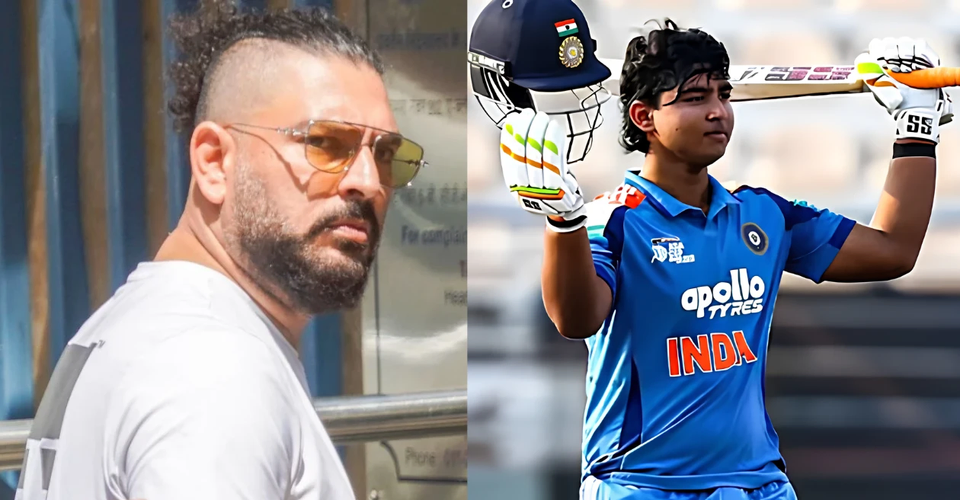
Vaibhav Sooryavanshi has explained that a half-hour conversation with Yuvraj Singh helped him address technical concerns before producing a record-breaking 204 from 53 balls for India A against the United Arab Emirates. The fresh account adds an important layer to an extraordinary innings: the teenager entered the match worried about his form and actively sought guidance before transforming his approach.
The 15-year-old struck 28 sixes in Doha and completed the fastest double century in List A cricket. Yet his post-match explanation was less about raw power than preparation, self-awareness and the value of advice. He said Yuvraj listened to the problems he was experiencing at the crease, discussed specific technical points and encouraged him to give himself enough time for the innings to develop.
A Difficult Run Before the Record Innings
Sooryavanshi's concern did not emerge without reason. He had scored 26 against Nepal and 11 against Pakistan A in his first two matches of the tournament. Before travelling to Doha, he made 18 for Bihar against Saurashtra in a domestic T20 game. Those returns created doubt for a young player accustomed to being discussed as an exceptional batting prospect.
Instead of ignoring the problem, he spoke to four trusted people: his father, childhood coach Manish Ojha, long-time friend Pratham Jachak and Yuvraj. The call with his idol lasted about 30 minutes. Sooryavanshi said the former India all-rounder broke down his concerns point by point and offered ideas he could test rather than vague encouragement.
Technical Advice Became a Practical Plan
One message stood out. If Sooryavanshi could negotiate his first 20 balls, the score might look very different. That advice did not ask him to abandon aggression. It placed his attacking ability inside a clearer framework, giving him time to read the pitch, settle his mind and identify the right moments to accelerate.
He later reviewed footage of his own batting and recognised a mistake. Combining video analysis with the conversation allowed him to enter the UAE match with concrete adjustments. The process shows why elite development is rarely based on a single motivational phrase. Observation, technical interpretation and the player's willingness to change all have to work together.
Sooryavanshi Changed Course After Reading the Pitch
The teenager said he originally intended to bat long, as he had tried to do in the previous games. After watching the first few deliveries, he felt the surface offered little assistance to the bowlers and that the ball was coming cleanly onto the bat. He then backed his natural strengths.
That decision produced a spectacular outcome, but the sequence matters. Sooryavanshi did not walk in committed to hitting every ball. He assessed conditions, recognised an opportunity and expanded his game. His claim that he can adapt across formats will face far tougher tests, but this innings provided evidence of tactical awareness alongside explosive hitting.
Why Yuvraj Singh Was the Right Voice
Yuvraj understands both destructive stroke play and the pressure placed on unusually talented young cricketers. His international career included periods of dominant form, technical challenge, public scrutiny and personal adversity. Advice from such a figure carries credibility because it comes from experience rather than theory alone.
For Sooryavanshi, the emotional dimension was equally important. He described Yuvraj as his idol and said that made him listen closely. The trust between mentor and player can make technical advice easier to absorb, especially when a batter's mind is distracted by recent failures.
The Next Challenge After a Historic Score
A record innings inevitably raises expectations. Opponents will study his scoring areas, build plans around early movement and test his patience when boundaries are harder to find. The most valuable lesson from Doha may therefore be the method that preceded the 204, not only the number itself.
Sooryavanshi responded to poor scores by seeking help, reviewing footage and adjusting to conditions. Those habits are more sustainable than depending on extraordinary hitting every time. The Yuvraj conversation will be remembered because it came before a record, but its larger significance lies in showing how a young batter can turn anxiety into a practical performance plan.
India A's remaining matches will test whether he can repeat that disciplined process when bowlers arrive with detailed plans. Even a quieter score can show progress if his shot selection, tempo and response to pressure remain sound. Records create headlines, but adaptability will shape the career that follows.
The episode also offers a useful distinction between imitation and mentorship. Sooryavanshi did not try to reproduce Yuvraj's batting style. He used an experienced player's questions to understand his own game more clearly, then applied only the changes that suited the conditions. That ability to absorb advice without losing individual strengths will matter as his career advances.
PUBLISHED BY SUYASH PACHAURI, FOUNDER & OWNER, GLOBAL BOLLYWOOD | THE HOLLYWOOD SCOPE.