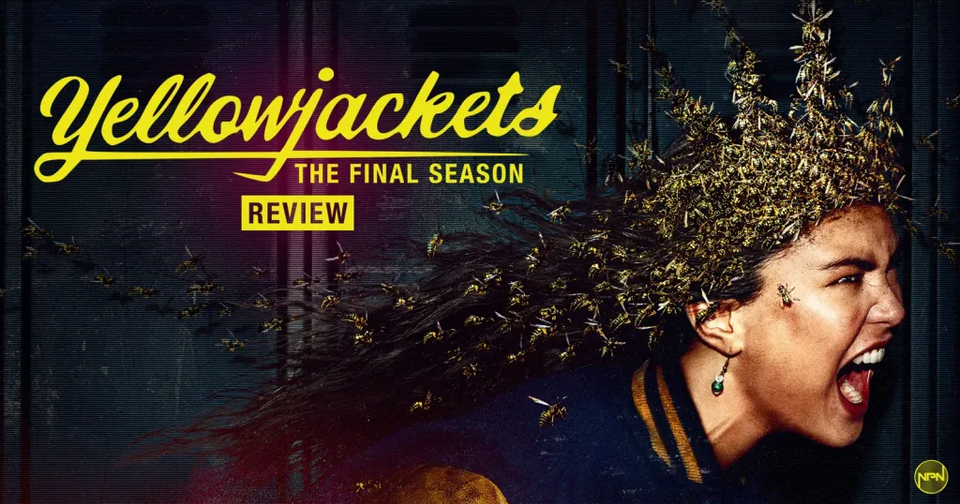
The final season turns survival into reckoning
Yellowjackets enters its fourth and final season with a difficult responsibility: it must resolve years of mystery without reducing the series to a list of answers. The surviving teenagers are moving closer to rescue, while the adult timeline confronts the accumulated cost of secrecy, violence and self-invention. Homecoming is not presented as escape, because the wilderness has already become part of every survivor’s identity.
Creators Ashley Lyle and Bart Nickerson built the drama around two forms of suspense. Viewers wanted to know what happened after the plane crash, but the deeper question concerned how those events shaped the adults decades later. The final season works best when it keeps those timelines emotionally connected, allowing an action in the past to alter the meaning of behaviour that once seemed merely eccentric or cruel.
The ensemble remains the series’ essential strength
Melanie Lynskey, Christina Ricci and Tawny Cypress continue to make the adult survivors distinct even when the plot pushes them toward a shared crisis. Sophie Nélisse, Samantha Hanratty, Jasmin Savoy Brown, Sophie Thatcher, Courtney Eaton and Liv Hewson carry the younger timeline with an understanding that friendship and terror are now impossible to separate. Hilary Swank’s Melissa increases the pressure between memory and present identity.
Warren Kole, Kevin Alves, Sarah Desjardins, Nia Sondaya and Jenna Burgess give the story relationships that exist beyond the central mystery. Guest appearances from June Squibb, Elijah Wood, Molly Ringwald, Devon Sawa, Sam Braun and Dulé Hill widen the final chapter. The cast is large, and the season occasionally strains to serve everyone, but the performances keep even crowded confrontations emotionally legible.
The past returns through behaviour rather than explanation
The most effective episodes do not treat trauma as a speech that solves a character. Fear appears in habits, alliances and sudden defensive choices. The teenagers’ descent was never only about food or weather; it involved the creation of rules that made unbearable actions feel necessary. The adults still rely on versions of those rules whenever ordinary life threatens to expose what they became.
That continuity gives the series its psychological force. A mystery can be answered once, but a survival belief can continue shaping a person for decades. The final season understands that rescue did not restore the group to a previous moral state. It simply moved them into a society where they learned to disguise the logic they carried home. Every reunion therefore contains affection, resentment and the possibility of renewed danger.
Not every mystery benefits from being extended
The season’s weakness is the weight of its accumulated mythology. Symbols, visions and shifting loyalties have generated compelling uncertainty, but they have also created expectations that no single explanation can completely satisfy. At times, characters seem to circle familiar arguments because the final disclosure must be delayed. Suspense becomes less effective when the structure is visible before the emotional reason for postponement.
The series is stronger when it accepts ambiguity instead of treating every strange image as a puzzle piece. The wilderness mattered because the characters believed it mattered, regardless of whether an external force can be proven. The final season’s best choices focus on responsibility: what people did, what they told themselves and what they owe those who were harmed. That moral clarity is more valuable than a supernatural diagram.
A conclusion measured by character rather than shock
Yellowjackets has always used horror to expose intimacy. The group knows one another in ways that make deception both easier and more painful. As the story approaches its end, the greatest threat is not simply legal exposure or physical violence. It is the possibility that the survivors can no longer maintain separate versions of themselves for family, friends and the people who shared the wilderness.
The final season does not always escape the repetition that affected earlier chapters, yet it regains purpose when the characters are forced to choose between protecting the group and acknowledging individual guilt. The ending needs consequence more than surprise. A conclusion that honours the performances and emotional history can succeed even if some mythology remains unresolved. The show’s real mystery has always been how people continue living after the unthinkable.
What comes next
Season four streams through the Premium tier, bringing the series to its planned conclusion. The remaining episodes must balance the rescue timeline, the adult consequences and the fates of characters whose absence has shaped the story from the beginning. Unequal attention could weaken the finish, but the ensemble gives the series a strong foundation.
Yellowjackets reaches its final stage with scars, secrets and performances capable of carrying more complexity than any single answer. The season is uneven when mythology controls the pace, but compelling when relationships control the scene. Its lasting achievement is the recognition that survival is not an ending. It is a condition that changes every choice made afterward.
Coming home ends the wilderness journey, but not the hunger it created.
PUBLISHED BY SUYASH PACHAURI, FOUNDER & OWNER, GLOBAL BOLLYWOOD | THE HOLLYWOOD SCOPE.