Introduction
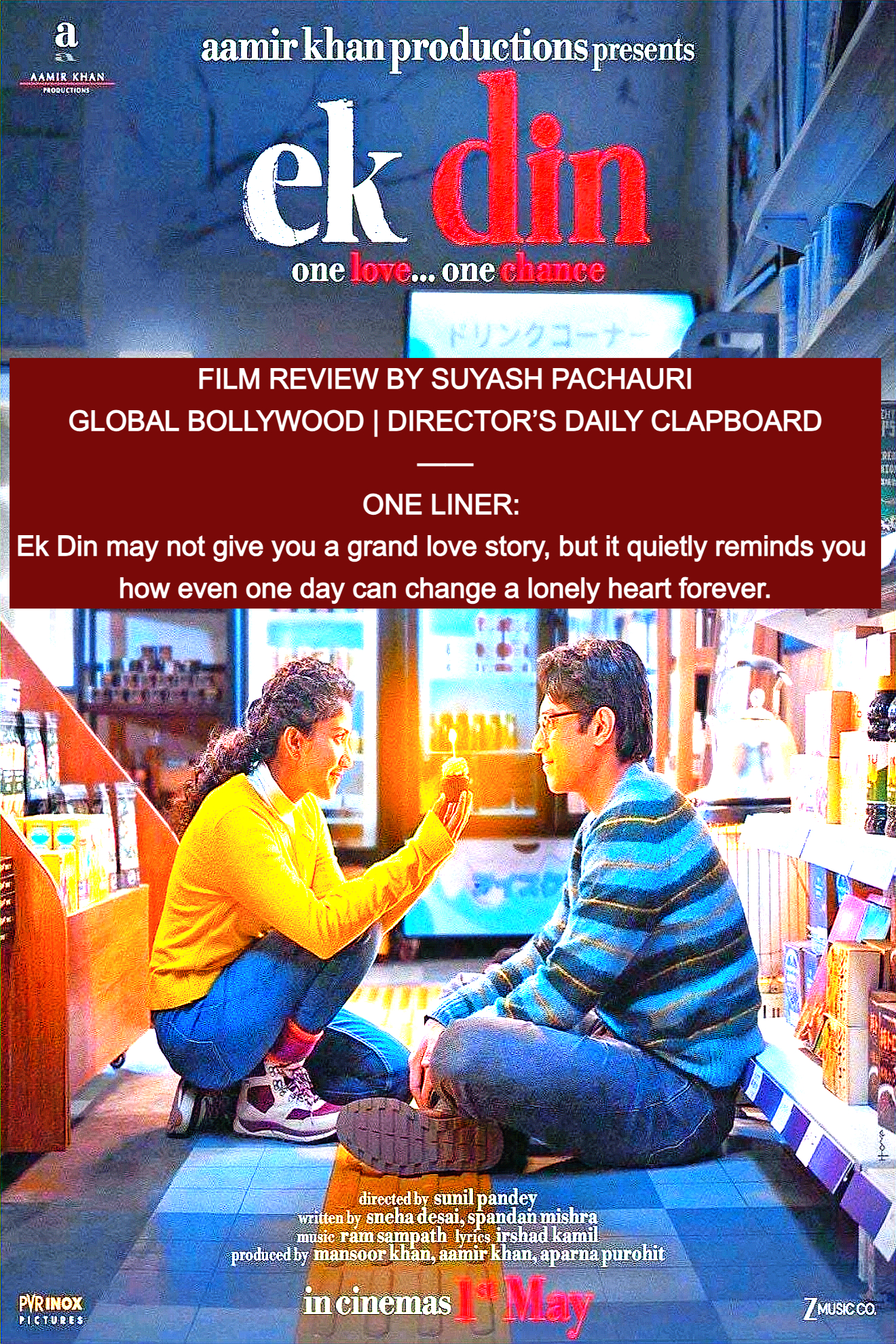
In an era where romantic dramas are often overloaded with loud emotions, flashy visuals, and predictable storytelling, Ek Din attempts to take the quieter route. Directed by Sunil Pandey and backed by Aamir Khan Productions, the film brings together Junaid Khan and Sai Pallavi in a tender love story that revolves around loneliness, memory, and emotional timing. Adapted from the Thai film One Day, the movie tries to blend realism with fantasy while presenting a deeply emotional connection between two people who are emotionally incomplete in their own ways.
The story follows Dinesh “Dino” Shrivastava (Junaid Khan), an introverted office employee who silently admires his colleague Meera Ranganathan (Sai Pallavi). During a company trip to Japan, destiny unexpectedly gives him one perfect day with the woman he loves. What begins as a sweet romantic fantasy slowly transforms into an emotional exploration of attachment, heartbreak, and acceptance.
Unlike commercial Bollywood romances that rely heavily on dramatic confrontations and larger-than-life moments, Ek Din is intentionally soft-spoken. The film moves at a relaxed pace and depends more on emotional silences than dialogues. While this approach works beautifully in certain portions, it also creates moments where the narrative feels stretched. Still, the sincerity of the performances and the emotional honesty of the film manage to leave an impression.
The biggest strength of Ek Din lies in the emotional atmosphere it creates. The snowy landscapes of Japan, the melancholic music, and the vulnerable performances give the film a warm yet bittersweet tone. It may not be a perfect romantic drama, but it definitely has its heart in the right place.
Screenplay & Script Sense
The screenplay by Sneha Desai and Spandan Mishra focuses heavily on emotional realism. The writing avoids unnecessary commercial distractions and stays committed to the central relationship between Dino and Meera. The first half spends considerable time establishing Dino’s loneliness, awkward social behavior, and silent admiration for Meera. While some viewers may find the pacing slow initially, the film patiently builds the emotional foundation necessary for the later portions.
One of the strongest aspects of the script is how it portrays unspoken love. Dino is not written as a conventional romantic hero. He is socially uncomfortable, emotionally vulnerable, and deeply insecure. The script smartly avoids turning him into an overdramatic character. Instead, it presents him as an ordinary man struggling with feelings he cannot express. This grounded characterization helps the audience connect with him.
Meera’s character is also written with emotional depth. She is not simply a love interest placed to support the hero’s journey. The screenplay gives her emotional layers, personal struggles, and moments of self-reflection. Sai Pallavi’s natural screen presence helps elevate these writing choices even further.
However, the screenplay is not without flaws. Certain portions in the second half become repetitive, especially when the emotional beats start revisiting the same ideas multiple times. Some scenes feel unnecessarily stretched, and a tighter edit could have improved the emotional impact. The fantasy element of the story also demands stronger emotional justification, but the film occasionally glosses over logic in favor of mood.
The dialogues are subtle and realistic. Instead of delivering dramatic monologues, the film relies on pauses, expressions, and incomplete conversations. This understated style works beautifully during emotional scenes but may not appeal to viewers expecting conventional Bollywood drama.
Overall, the screenplay succeeds more emotionally than structurally. It is uneven in pacing but emotionally sincere enough to keep the audience invested.
Direction
Sunil Pandey approaches Ek Din with remarkable sensitivity. His direction avoids excessive melodrama and allows the emotions to unfold naturally. He understands that the film’s strength lies in emotional intimacy rather than grand storytelling, and he remains consistent with that vision throughout.
One of the most impressive aspects of the direction is the atmosphere. The snowy Japanese locations are not used merely for visual beauty; they become an emotional extension of the characters’ loneliness and isolation. Pandey creates a dream-like romantic mood that gives the film its unique identity.
The director also deserves credit for controlling the performances. Junaid Khan’s restrained portrayal could have easily become dull in the hands of another filmmaker, but Pandey keeps the character emotionally relatable. Similarly, Sai Pallavi’s emotional scenes are handled with simplicity rather than exaggeration.
Where the direction struggles slightly is in maintaining narrative momentum. The film becomes too indulgent in certain emotional sequences, resulting in pacing issues. A few scenes linger longer than necessary, and the emotional rhythm occasionally slows down the overall experience.
Still, Pandey deserves appreciation for resisting the temptation to commercialise the film unnecessarily. There are no forced action scenes, exaggerated comedy tracks, or loud emotional manipulations. The film stays true to its emotional core.
For a romantic drama that depends entirely on emotional connection, the direction largely succeeds in creating a heartfelt cinematic experience.
Acting
Sai Pallavi once again proves why she is regarded as one of the most emotionally authentic performers in Indian cinema today. As Meera Ranganathan, she brings warmth, innocence, and emotional vulnerability to the role. Her performance feels incredibly natural throughout the film. She never appears to be “acting”; instead, she completely lives the character.
Her expressive eyes do most of the emotional work, especially during the film’s quieter moments. Whether it is happiness, confusion, sadness, or emotional exhaustion, Sai Pallavi communicates every feeling with honesty. Even in scenes where the writing becomes repetitive, she keeps the emotional energy alive.
Junaid Khan delivers a sincere performance as Dino. He clearly suits emotionally awkward characters better than larger commercial roles. His body language, hesitation in conversations, and socially uncomfortable personality feel believable. There is visible improvement in his screen presence compared to his earlier work.
However, there are moments where his performance lacks emotional intensity. Certain scenes required stronger emotional breakdowns, but Junaid maintains the same restrained tone throughout. While this works for most of the film, a few high-emotion scenes needed greater impact.
Still, the chemistry between Junaid Khan and Sai Pallavi becomes the emotional backbone of the film. Their interactions feel soft, genuine, and emotionally grounded rather than artificially romantic.
Kunal Kapoor appears in a special role as Nakul Bhasin and leaves a strong impact despite limited screen time. His mature screen presence adds emotional complexity to the narrative.
Kavin Dave as Samarjit “Sam” Hathiramani provides light moments without becoming irritating. Reshma Shetty performs confidently as Ketki Patel and adds realism to the workplace environment.
Jenifer Emmanuel, Astha Gulati, Neha Vyaso, Chakori Dwivedi, and Pragati Mishra perform their supporting roles effectively and help create a believable social atmosphere around the lead characters.
Veteran performers like Samta Sagar and Rajendra Jadhav also bring emotional authenticity to their brief appearances.
Overall, the performances remain one of the film’s strongest pillars.
Supporting Cast
The supporting cast in Ek Din may not dominate the narrative, but they contribute significantly to the emotional texture of the film.
Kunal Kapoor brings elegance and emotional maturity to his role. Even with limited scenes, his presence feels meaningful. He naturally adds emotional tension without needing exaggerated dialogues.
Kavin Dave delivers a pleasant supporting performance and successfully balances humor with emotional support. His character never feels forced into the narrative.
Reshma Shetty adds realism to the office environment and performs with confidence. Jenifer Emmanuel and Astha Gulati also contribute effectively in smaller roles.
Neha Vyaso and Chakori Dwivedi help maintain the workplace dynamic, while Samta Sagar performs emotionally in her scenes as Dino’s mother.
The supporting cast may not receive major dramatic moments, but every actor contributes to the film’s grounded atmosphere.
Cinematography
Manoj Lobo’s cinematography is undoubtedly one of the finest aspects of Ek Din. The film looks visually beautiful from beginning to end. The snowy streets, soft lighting, and quiet landscapes create an emotional mood that perfectly complements the story.
Japan becomes more than just a shooting location; it becomes part of the emotional storytelling. The cold atmosphere visually reflects the emotional loneliness of the characters.
The camera work remains intimate and restrained. Instead of flashy movements, the cinematography focuses on close-ups and emotional expressions. The visual storytelling feels poetic without becoming overly artistic.
The color palette deserves special mention. The soft blues, whites, and muted tones give the film a melancholic yet comforting visual identity.
Even the indoor office scenes are framed realistically, helping maintain the grounded tone of the film. Overall, the cinematography adds tremendous emotional value to the storytelling.
Music & Background Score
Ram Sampath’s music works beautifully within the emotional framework of the film. Instead of creating chartbuster-style songs, the soundtrack focuses on mood and emotional continuity.
The songs feel soft, melancholic, and emotionally soothing. Arijit Singh’s vocals add emotional depth to the romantic tracks, making them memorable even after the film ends.
The background score is subtle and effective. It never overpowers the scenes but quietly supports the emotions. The music especially enhances the silent romantic moments between Dino and Meera.
Some songs may not have massive commercial appeal, but within the narrative they work extremely well.
The music successfully complements the film’s emotional atmosphere.
Editing
Ballu Saluja’s editing is decent but not entirely effective. The film could have benefited from tighter pacing, especially in the second half.
Certain emotional scenes stay on screen longer than necessary, which slows the momentum. Some repetitive emotional beats could have been trimmed to create a sharper narrative flow.
However, the emotional transitions are handled smoothly, and the film never feels disjointed.
The editing works better in the intimate emotional scenes than in the narrative progression.
A crisper edit could have transformed Ek Din from a good romantic drama into a truly memorable one.
Final Verdict
Ek Din is not a loud romantic entertainer designed for whistles and applause. It is a soft, emotionally driven love story that depends entirely on mood, performances, and emotional sincerity.
The film has flaws - the pacing is uneven, the screenplay occasionally becomes repetitive, and the emotional payoff could have been stronger. But despite these shortcomings, the film remains emotionally honest.
Sai Pallavi delivers the strongest performance in the film and once again proves her ability to elevate emotionally delicate characters. Junaid Khan shows improvement and fits naturally into the role of an emotionally awkward romantic lead.
The cinematography, music, and emotional atmosphere become the film’s biggest strengths.
While Ek Din may not satisfy audiences expecting a high-energy Bollywood romance, viewers who appreciate slow, emotional storytelling may connect deeply with it.
It is not a perfect film, but it is definitely a heartfelt one.
On the Plus Side
Sai Pallavi’s deeply natural performance
Beautiful cinematography by Manoj Lobo
Emotional and soothing music by Ram Sampath
Sensitive direction by Sunil Pandey
Genuine chemistry between the lead actors
Realistic emotional tone
On the Minus Side
Slow pacing in several portions
Repetitive emotional scenes in the second half
Junaid Khan lacks intensity in some key moments
The fantasy element feels under explained
Could have benefited from tighter editing
One Liner
“Ek Din may not give you a grand love story, but it quietly reminds you how even one day can change a lonely heart forever.”