Introduction
There are some films that scream for attention with giant stars, glossy visuals, and oversized drama. Then there are films like Dug Dug that quietly walk into theatres with an unusual premise and slowly grow on you scene by scene. Directed by Ritwik Pareek, Dug Dug is not your conventional commercial entertainer. It is a satirical social drama wrapped inside a dark comedy, layered with mystery, blind faith, rural politics, and human desperation.
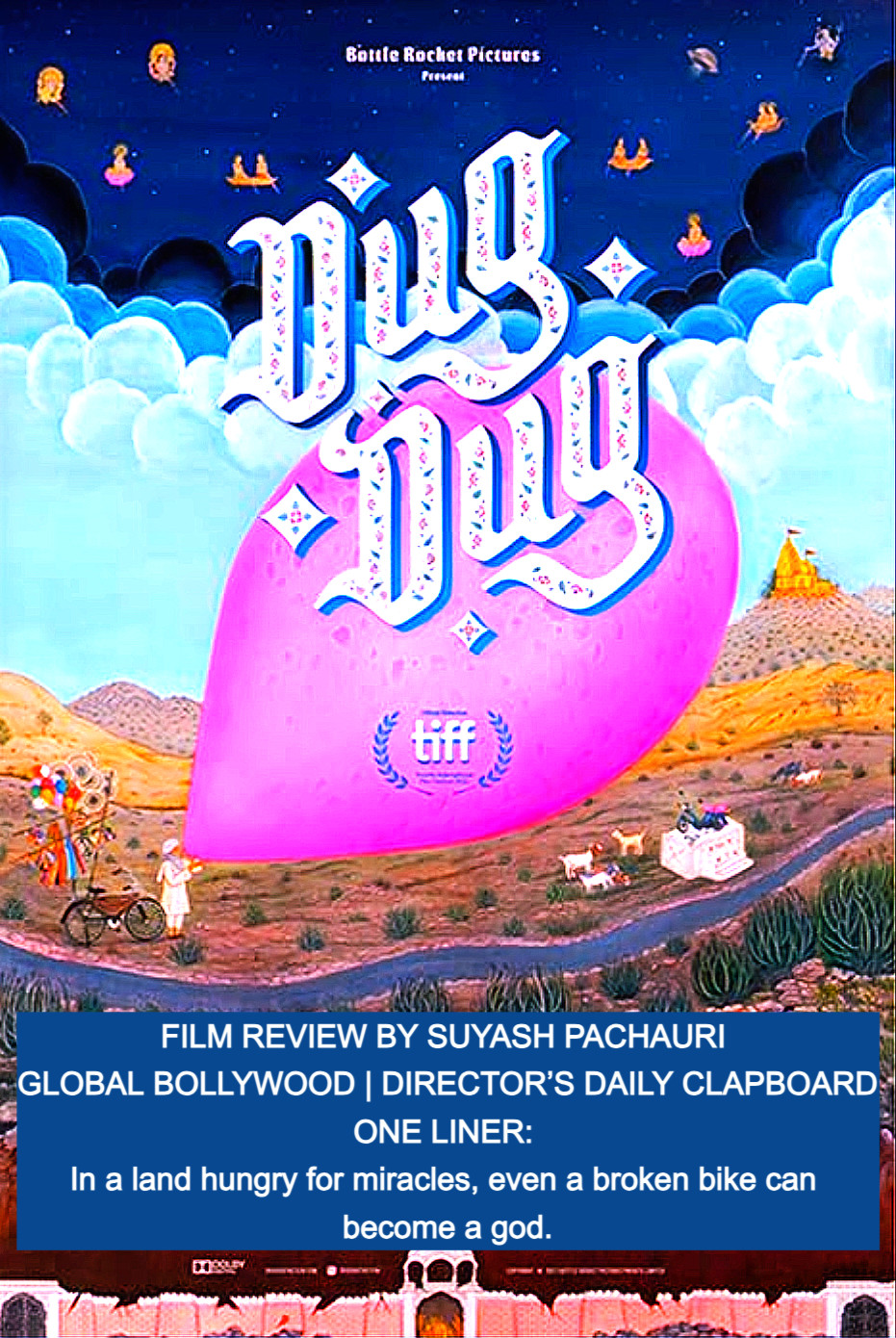
The film revolves around a strange incident in a village after the death of Thakur Sa, whose motorcycle mysteriously becomes an object of worship. Villagers begin believing that the bike grants wishes if alcohol is offered to it. What begins as a bizarre rumor slowly turns into a full-fledged religious phenomenon. It sounds absurd on paper, but that absurdity is exactly what gives Dug Dug its identity.
What truly works in the film is its honesty. It never tries too hard to impress the audience with forced emotions or exaggerated drama. Instead, it quietly observes how people build faith out of fear, greed, hope, and helplessness. The film uses humor brilliantly, but beneath the comedy lies an uncomfortable truth about society and commercialization of belief systems.
Dug Dug may not be designed for audiences looking for loud mass entertainment, but for viewers who appreciate rooted storytelling and unconventional cinema, this film becomes a refreshing experience.
Screenplay & Script Sense
The screenplay by Ritwik Pareek is undoubtedly the film’s strongest weapon. The script is sharp, unpredictable, and packed with situational humor that feels organic instead of manufactured. The film smartly balances satire and realism without becoming preachy.
The writing captures the psychology of small-town communities extremely well. Every rumor spreads like wildfire, every coincidence becomes divine intervention, and every opportunist finds a business angle in faith. The screenplay carefully builds this world step by step, making even the most ridiculous moments believable.
What deserves appreciation is how the film avoids taking a direct moral stand. It neither openly mocks faith nor blindly glorifies it. Instead, it presents people exactly as they are vulnerable, emotional, manipulative, and desperate for miracles.
The dialogues feel authentic and rooted in the setting. There is a rawness in the language that makes the characters believable. Several scenes land beautifully because of their understated writing rather than dramatic punchlines.
However, the screenplay does slow down slightly in the middle portions. Certain sequences stretch longer than needed, and a tighter narrative could have elevated the impact further. But thankfully, the film regains momentum before the climax.
Overall, the script shows remarkable maturity for an indie satire and proves that original storytelling still exists in Hindi cinema.
Direction
Ritwik Pareek handles the direction with impressive confidence. This is not an easy subject to execute because the film constantly walks a thin line between satire and sensitivity. One wrong tone and the film could have become offensive or unintentionally silly. But Pareek maintains control over the narrative throughout.
His biggest achievement lies in creating authenticity. The village feels real, the people feel lived-in, and the situations feel strangely believable despite their bizarre nature. The film never looks staged or artificially cinematic.
Pareek also deserves credit for extracting natural performances from relatively lesser-known actors. The chemistry between the characters never feels forced. Even crowd scenes feel spontaneous and grounded.
What stands out is his restraint. Instead of overdramatizing emotional scenes, he lets silence and expressions do the work. Several moments are staged with minimal dialogue, yet they communicate volumes.
The direction also smartly uses dark humor. Many scenes make you laugh initially, but the deeper meaning hits a few seconds later. That layered storytelling reflects confidence behind the camera.
At times, the film’s pacing becomes uneven, especially in the second half, and a more gripping climax could have made the film even stronger. Still, for a filmmaker attempting such a unique subject, the execution is highly commendable.
Acting
The performances in Dug Dug feel refreshingly natural because none of the actors try to “perform” for applause. Instead, they completely disappear into their characters.
Altaf Khan as Thakur Sa leaves a surprisingly strong impact despite limited screen presence. His character becomes the center of the story even after death, and Altaf Khan’s earthy performance gives the film emotional grounding. There is something mysterious yet tragic about his portrayal.
Gaurav Soni as Pyare Lal delivers one of the most entertaining performances in the film. He perfectly captures the confusion, greed, and excitement of a man caught in a rapidly changing situation. His comic timing feels effortless, and several scenes work largely because of his reactions and body language.
Yogendra Singh Parmar as Badri brings sincerity and realism to the narrative. He portrays the emotional vulnerability of rural life convincingly and adds emotional depth to the otherwise satirical atmosphere.
Durga Lal Saini as Manfool is another standout performer. His scenes feel incredibly authentic, and he represents the common villager mentality with honesty. His expressions alone communicate half the humor.
Sarvesh Vyas as the Inspector adds subtle authority and dry humor to the film. He underplays the role effectively instead of turning it into a caricature.
The beauty of the cast lies in their realism. Nobody behaves like a typical “movie character.” They speak, react, and exist like actual people from the region. That authenticity elevates the entire film.
Supporting Cast
The supporting characters in Dug Dug are not merely fillers; they become active participants in the madness unfolding within the village. Every villager contributes to the atmosphere of chaos, superstition, and blind belief.
The ensemble cast deserves appreciation because the film heavily depends on collective energy rather than one superstar carrying the narrative. Whether it is villagers turning devotees overnight or opportunists exploiting the situation for money and influence, every supporting actor adds credibility to the story.
The crowd dynamics are particularly impressive. The reactions of ordinary people slowly transforming into religious frenzy feel disturbingly realistic. The film successfully captures how mass hysteria grows through gossip and emotional vulnerability.
Cinematography
Aditya S Kumar gives the film a gritty and earthy visual identity. The cinematography never tries to beautify rural life artificially. Instead, it embraces dust, darkness, crowded streets, and raw textures.
The night sequences are especially effective. The visuals around the mysterious bike create an eerie atmosphere without relying on horror-film clichés. The camera quietly observes the madness instead of dramatizing it.
Several wide shots beautifully capture the transformation of the village from an ordinary place into a chaotic center of blind faith. The cinematography complements the satire perfectly by keeping the visuals grounded and realistic.
The handheld camera work in many scenes adds intimacy and realism, making viewers feel like silent observers inside the village.
Music & Background Score
The music in Dug Dug works more as an extension of the storytelling rather than commercial interruption. The folk-inspired sound design blends naturally with the film’s setting.
The background score smartly avoids becoming overly dramatic. Instead, it quietly builds tension, mystery, and absurdity underneath scenes. Some moments become unintentionally hilarious because of the clever use of sound.
The rustic musical texture suits the narrative perfectly and enhances the authenticity of the environment. The soundtrack may not produce chartbuster songs, but it definitely strengthens the film’s mood.
Editing
Bijith Bala keeps the film reasonably tight despite a few sluggish stretches. The editing effectively balances humor and tension, ensuring the film doesn’t lose its satirical tone.
The transitions between comedy and seriousness are handled smoothly. Crowd sequences and rumor-spreading montages are particularly well edited and contribute to the storytelling pace.
However, the middle section could have been trimmed slightly for a sharper impact. Certain scenes linger longer than necessary, affecting momentum briefly. Still, the overall editing supports the film’s grounded narrative style.
Final Verdict
Dug Dug is one of those rare Hindi films that dares to be different. It is quirky, uncomfortable, funny, thought-provoking, and deeply rooted in social reality. Instead of relying on formulaic storytelling, the film trusts its writing, performances, and atmosphere.
The film may not cater to everyone, especially audiences expecting mainstream entertainment filled with glamour and heroic moments. But for viewers who appreciate unconventional cinema and meaningful satire, Dug Dug offers a genuinely engaging experience.
Ritwik Pareek emerges as a filmmaker to watch out for because he handles a risky subject with remarkable maturity and restraint.
This is not just a story about a “miracle bike.” It is actually a sharp reflection of society’s obsession with shortcuts, blind belief, and manufactured faith.
On the Plus Side
Original and fearless concept
Strong screenplay with layered satire
Natural performances from the entire cast
Authentic rural atmosphere
Intelligent dark humor
Thought-provoking social commentary
Excellent cinematography and sound design
On the Minus Side
Slightly slow pacing in the middle portions
Climax could have been more impactful
Some viewers may find the satire too subtle
Not designed for hardcore commercial cinema audiences
One Liner
“In a land hungry for miracles, even a broken bike can become a god.”