Introduction
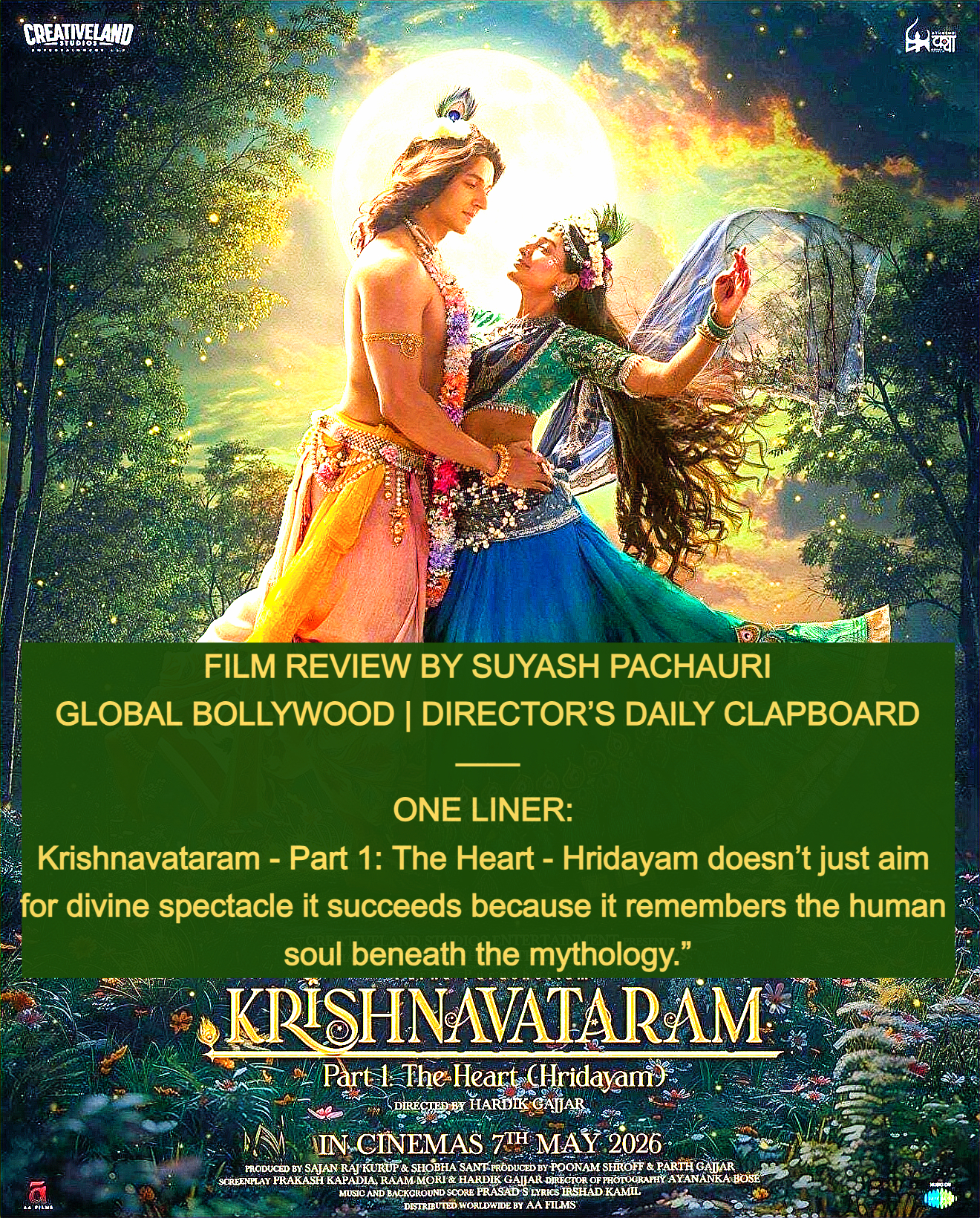
Mythological cinema has always been a difficult genre to pull off convincingly. One wrong step and it either becomes overdramatic television-style storytelling or a visually polished but emotionally hollow spectacle. Krishnavataram - Part 1: The Heart - Hridayam tries very hard to avoid both traps, and for the most part, it succeeds.
The film arrives with massive ambition, larger-than-life themes, spiritual symbolism, emotional conflict, and a narrative rooted deeply in devotion and dharma. But what truly works in its favour is that beneath all the grandeur, the film surprisingly carries a beating emotional core.
Instead of treating mythology as mere fantasy, the makers attempt to humanize the divinity.
The story focuses not just on power, miracles, or spectacle, but on emotions - love, sacrifice, compassion, pain, and destiny. That is exactly why the subtitle “The Heart - Hridayam” feels justified. The emotional thread remains central throughout the film.
The film’s biggest achievement is its sincerity. It does not mock its source material, nor does it modernize mythology unnecessarily for quick applause. It respects the culture, faith, and philosophy behind the narrative while trying to present it in a cinematic language accessible to today’s audience.
At the same time, the film is not flawless. Its runtime occasionally becomes exhausting, some dialogues become preachy, and a few scenes clearly exist only to set up future installments rather than serve this story organically. But despite these issues, the film manages to stay emotionally engaging because of its performances, music, and visual conviction.
Unlike many mythological projects that depend only on VFX and loudness, this one understands atmosphere. It wants audiences to feel devotion, pain, and wonder simultaneously. And honestly, several scenes genuinely achieve that effect.
Screenplay & Script Sense
The screenplay is both the film’s strength and weakness.
The writers deserve credit for attempting layered storytelling instead of spoon-feeding the audience. The narrative constantly shifts between emotional intimacy, philosophical conversations, spiritual symbolism, and grand visual moments. There’s clear effort to balance mass appeal with devotional depth.
The first half is particularly engaging because it takes time building relationships and emotional foundations. Instead of rushing into battles and spectacle, the script invests in character emotions. This slow burn works beautifully during the initial portions because the audience gets emotionally attached to the journey.
The emotional exchanges are written with maturity in several places. Conversations about destiny, sacrifice, and the burden of divinity carry genuine weight. Some dialogues may sound theatrical, but they fit the mythological world the film creates.
However, the screenplay becomes uneven in the second half. Certain sequences feel stretched beyond necessity. There are moments where the film becomes too self-aware about setting up “Part 2,” and that slightly weakens the emotional payoff of this chapter. A tighter edit in the latter portions would have elevated the impact tremendously.
Another issue is exposition overload. There are scenes where characters explain mythology instead of letting visuals and emotions communicate naturally. The film occasionally underestimates the audience’s intelligence by overexplaining spiritual themes.
Still, when the screenplay works, it works wonderfully. The emotional scenes involving internal conflict, faith, and duty are handled with sincerity. The writers clearly understand the emotional and philosophical importance of the source material.
One major positive is that the film never loses its emotional identity. Even during action-heavy or visually grand sequences, the central theme of “heart” remains intact. That consistency gives the screenplay a strong emotional backbone.
Direction
The director deserves appreciation for handling such a massive canvas with confidence. Mythological storytelling demands conviction, and this film certainly has that.
What stands out immediately is the tonal consistency. The film never turns into parody or melodrama despite walking a very thin line. The director understands the importance of maintaining dignity in mythological cinema. Every frame feels respectfully designed.
The world-building is immersive. The kingdoms, temples, forests, spiritual settings, and battle arenas feel thoughtfully imagined. The visual language constantly attempts to create divine grandeur without becoming cartoonish.
The emotional staging is arguably the strongest aspect of the direction. Several scenes are designed with patience rather than hyperactive cutting. Emotional silences are allowed to breathe. Reactions matter. Expressions matter. That maturity helps the film emotionally resonate.
The devotional scenes are handled particularly well. Instead of reducing spirituality into loud background chants and slow-motion overload, the director tries to create emotional stillness. Some moments genuinely feel meditative.
At the same time, the scale occasionally overwhelms the storytelling. Certain large-scale sequences become visually noisy. A few VFX-heavy scenes lack emotional grounding and feel included purely for spectacle.
The pacing is another issue. The director seems so invested in world-building that some scenes overstay their welcome. The film could easily have been sharper with stronger restraint.
Still, managing a project of this scale while maintaining emotional coherence is not easy, and the director deserves applause for ambition alone. More importantly, the film has soul - something many modern spectacles forget to include.
Acting
The performances are one of the film’s biggest strengths.
Siddharth Gupta delivers a committed and emotionally sincere performance. He carries the emotional burden of the narrative effectively and brings both vulnerability and intensity to the role. His screen presence grows stronger as the film progresses, especially during emotionally conflicted moments. Rather than playing the character with excessive heroism, he allows emotional fragility to surface, which makes the performance believable.
Sanskruti Jayana brings grace and emotional warmth to the film. She performs with elegance and sincerity, especially during emotionally layered scenes. Her chemistry with Siddharth Gupta feels natural and emotionally grounded rather than overly dramatic. She also handles spiritual and emotional scenes with maturity.
Sushmitha Bhat leaves a surprisingly strong impact despite limited screen time. She brings emotional depth and quiet strength to her character. Some of her scenes become emotionally memorable because of her expressive performance.
The lead cast overall understands the tone of the film. Nobody performs like they are in a loud commercial masala entertainer. The acting style remains rooted and respectful to the mythological atmosphere.
Particularly impressive are the emotional confrontation scenes. Instead of relying on screaming or theatrical excess, the actors often communicate pain and devotion through restrained performances.
The film also benefits from strong body language and costume adaptation. Mythological roles can easily look artificial if actors appear uncomfortable, but most of the cast carries the visual identity convincingly.
Supporting Cast
The supporting cast contributes significantly to the film’s emotional texture and world-building.
Several senior performers bring gravitas to mentor-like and spiritual roles. Their presence adds authenticity to the mythological environment. Even actors with brief appearances leave an impression because the film gives emotional importance to character moments.
The antagonistic characters are handled decently, though some could have been written with more complexity. A few villainous figures feel slightly generic compared to the emotional richness given to the protagonists.
The supporting female characters are written better than expected for a mythological film. They are not merely decorative presences; many contribute emotionally and philosophically to the narrative.
Child performers also deserve appreciation. Their innocence and emotional honesty add warmth to the film, especially in scenes centered around faith and compassion.
One noticeable positive is that the film avoids unnecessary comic-relief side characters that would have diluted the tone. The supporting cast exists to strengthen the emotional and spiritual atmosphere rather than distract from it.
Cinematography
Visually, the film is stunning in several portions.
The cinematography beautifully captures the mythological grandeur while maintaining emotional intimacy. Golden lighting, temple silhouettes, flowing fabrics, divine imagery, and large landscape compositions are used effectively to create a spiritual cinematic atmosphere.
Some frames genuinely resemble moving paintings. The use of warm tones during emotional sequences enhances the devotional mood beautifully. Forest sequences, palace interiors, and spiritual ceremonies are particularly well-shot.
The camera movements are mostly graceful rather than chaotic, which suits the film’s tone. Instead of excessive shaky action cinematography, the visuals prioritize visual elegance and emotional immersion.
Close-up shots are used intelligently during emotional scenes. The cinematographer understands that mythology is not only about spectacle it is also about human emotion and internal struggle.
However, some CGI-heavy sequences reveal technical inconsistency. A few visual effects shots feel unfinished or overly artificial, slightly breaking immersion. Certain battle sequences also become visually cluttered due to excessive effects layering.
Still, overall, the cinematography successfully creates a believable mythological universe filled with grandeur and emotional spirituality.
Music & Background Score
The music is among the film’s strongest pillars.
The devotional compositions carry emotional power without sounding outdated. The songs feel integrated into the narrative rather than randomly inserted for commercial purposes. Several tracks genuinely elevate emotional scenes.
The background score deserves special appreciation. It understands restraint. Instead of constantly blasting loud orchestral noise, the music often supports emotion subtly. Silence is also used intelligently in key scenes.
The spiritual chants, percussion elements, orchestral layering, and emotional melodies combine effectively to create immersion. During emotionally intense scenes, the score becomes hauntingly effective.
One particular strength is how the music distinguishes emotional spirituality from action grandeur. The devotional scenes have softness and emotional depth, while battle sequences carry scale and tension.
A few songs could have been shorter, but overall the soundtrack leaves a lasting impression and significantly enhances the cinematic experience.
Editing
Editing is where the film struggles the most.
The first half flows relatively smoothly because emotional investment keeps the audience engaged. But the second half becomes inconsistent in rhythm. Some scenes linger too long, while others transition too abruptly.
The film occasionally feels overindulgent with slow-motion shots and prolonged emotional pauses. While mythology benefits from visual patience, excessive stretching affects pacing.
A tighter runtime would have made the narrative far more impactful. Several exposition-heavy sequences and repetitive emotional beats could easily have been trimmed.
The action scenes are edited decently, though certain VFX-heavy moments become visually chaotic because of rapid cuts.
Still, the emotional continuity remains intact throughout the film, which prevents the editing flaws from completely damaging the experience.
Final Verdict
Krishnavataram – Part 1: The Heart – Hridayam is an ambitious, emotionally sincere, and visually immersive mythological drama that succeeds more because of its heart than its spectacle.
It is not a perfect film. The pacing is uneven, some sequences become overlong, and the screenplay occasionally gets trapped between storytelling and franchise-building. But the film compensates through emotional honesty, strong performances, respectful direction, powerful music, and spiritual atmosphere.
What truly makes the film work is its emotional sincerity. It treats mythology not as a commercial gimmick but as emotional storytelling rooted in faith, compassion, sacrifice, and destiny.
Siddharth Gupta delivers a committed performance filled with emotional conviction, while Sanskruti Jayana and Sushmitha Bhat add grace and emotional depth to the narrative.
The film may not satisfy viewers expecting nonstop action spectacle every ten minutes, but audiences willing to immerse themselves in emotional mythological storytelling will find plenty to admire.
Most importantly, the film leaves you emotionally invested in what comes next and for the first chapter of a mythological saga, that is a major victory.
On the Plus Side
Emotionally sincere storytelling
Strong lead performances
Respectful handling of mythology
Beautiful cinematography
Powerful background score
Excellent devotional atmosphere
Strong emotional scenes
Impressive world-building
On the Minus Side
Uneven pacing in the second half
Runtime feels excessive at times
Some VFX inconsistencies
Over explaining through dialogues
Certain scenes exist mainly for sequel setup
Editing could have been tighter
One Liner
“Krishnavataram - Part 1: The Heart - Hridayam doesn’t just aim for divine spectacle it succeeds because it remembers the human soul beneath the mythology.”